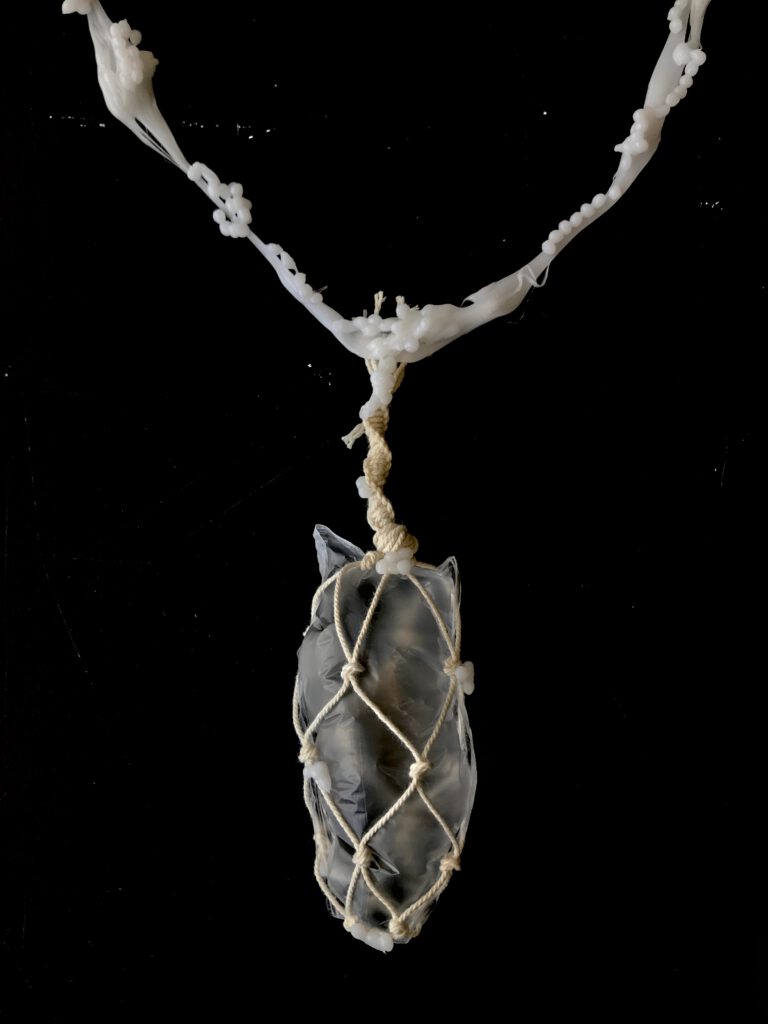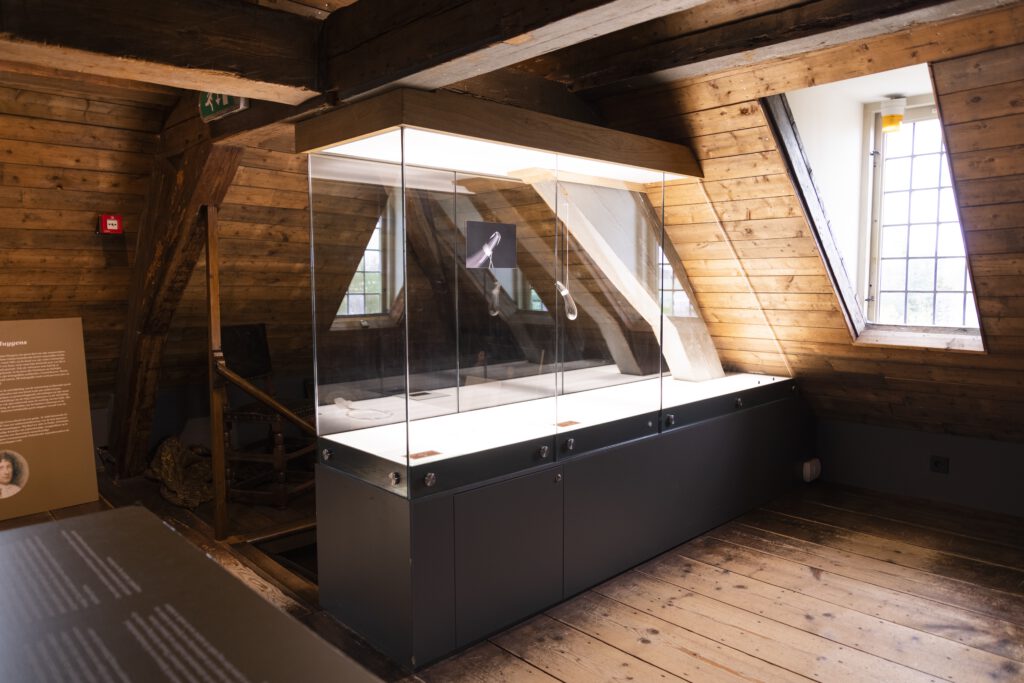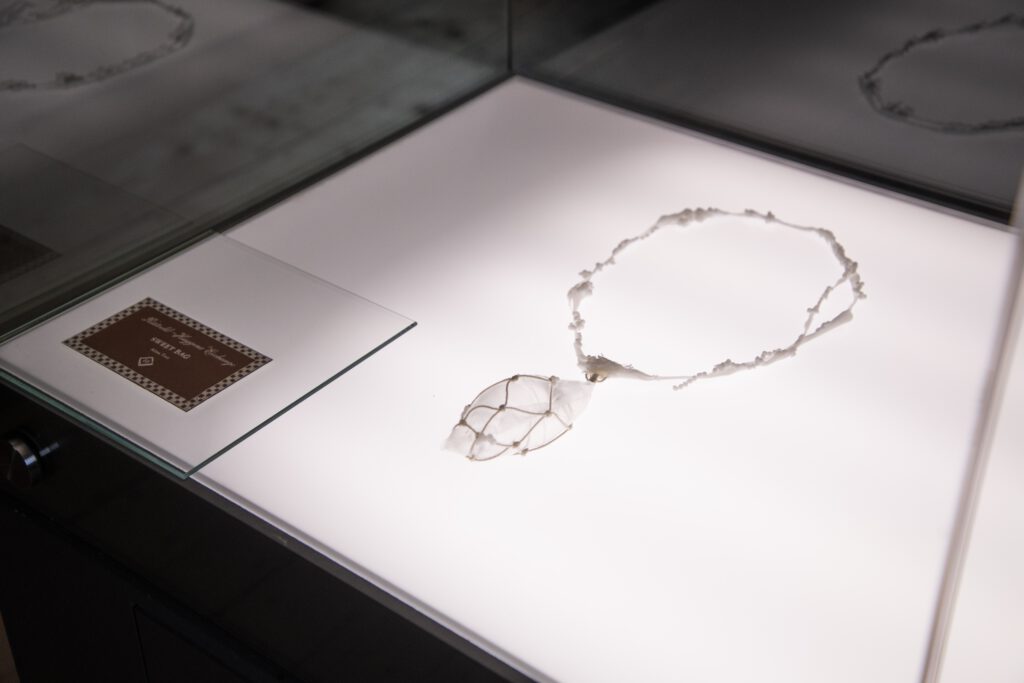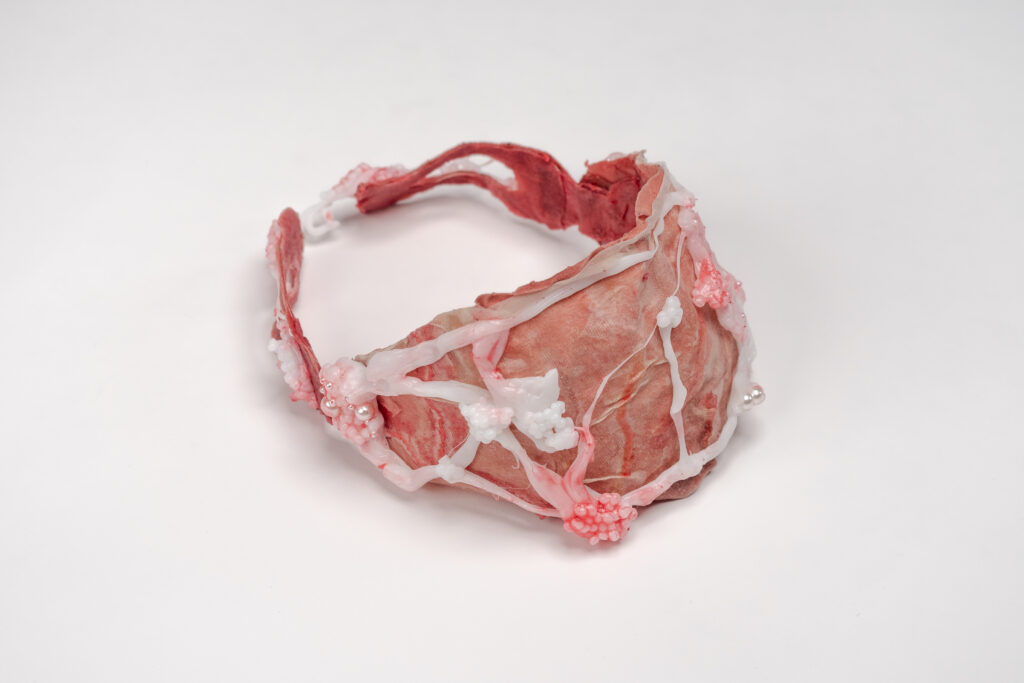
Thermoplastic, latex, nylon, glasspearls
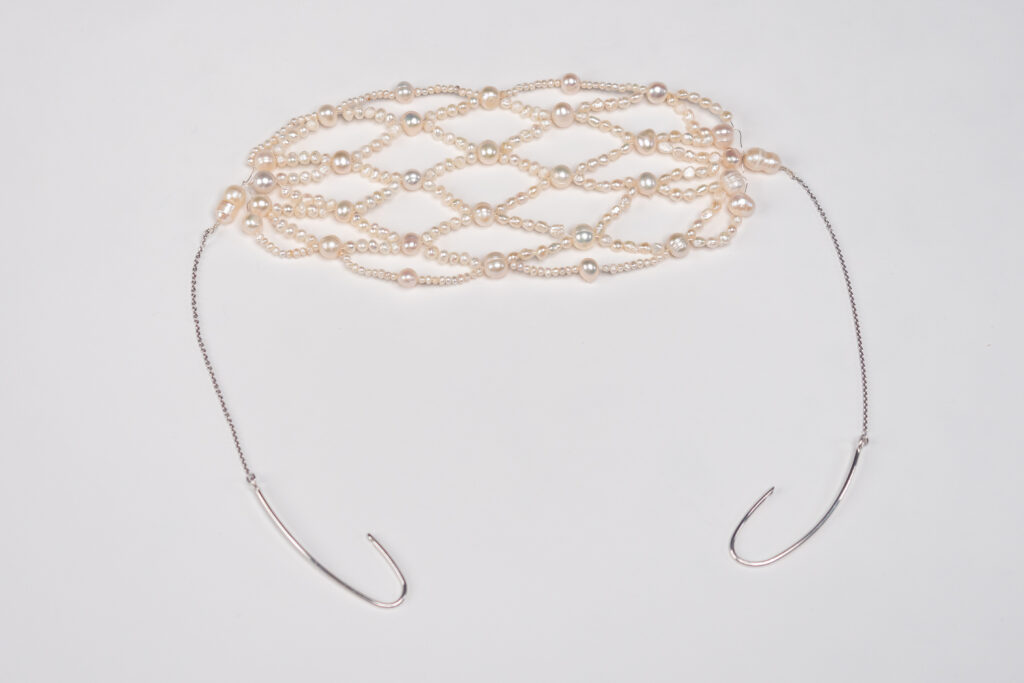
Innocence
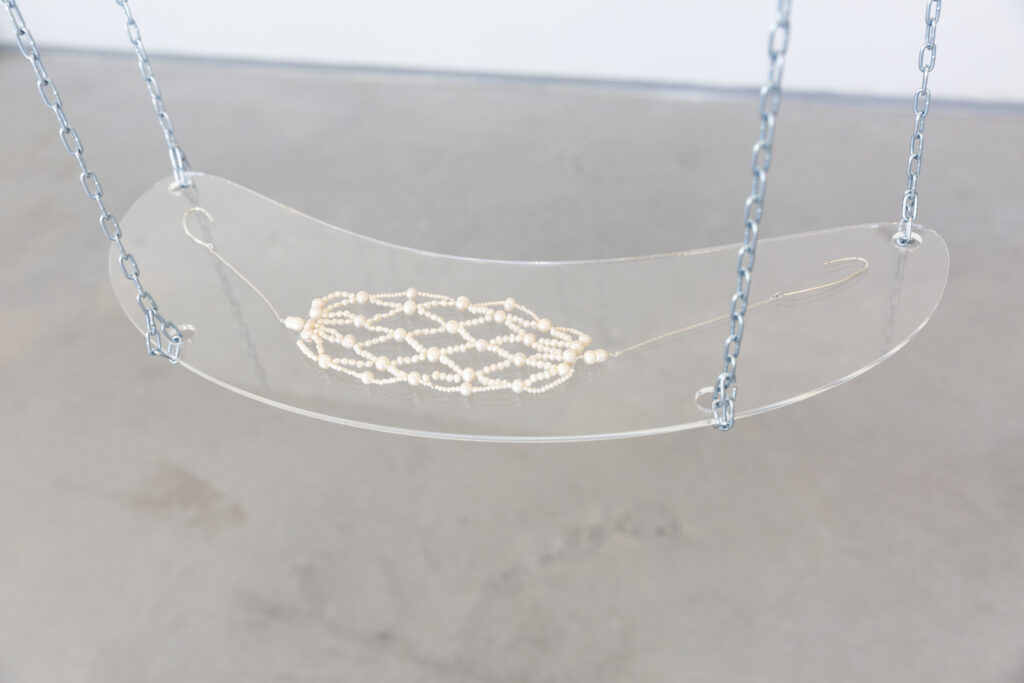
Pearls and sterling silver
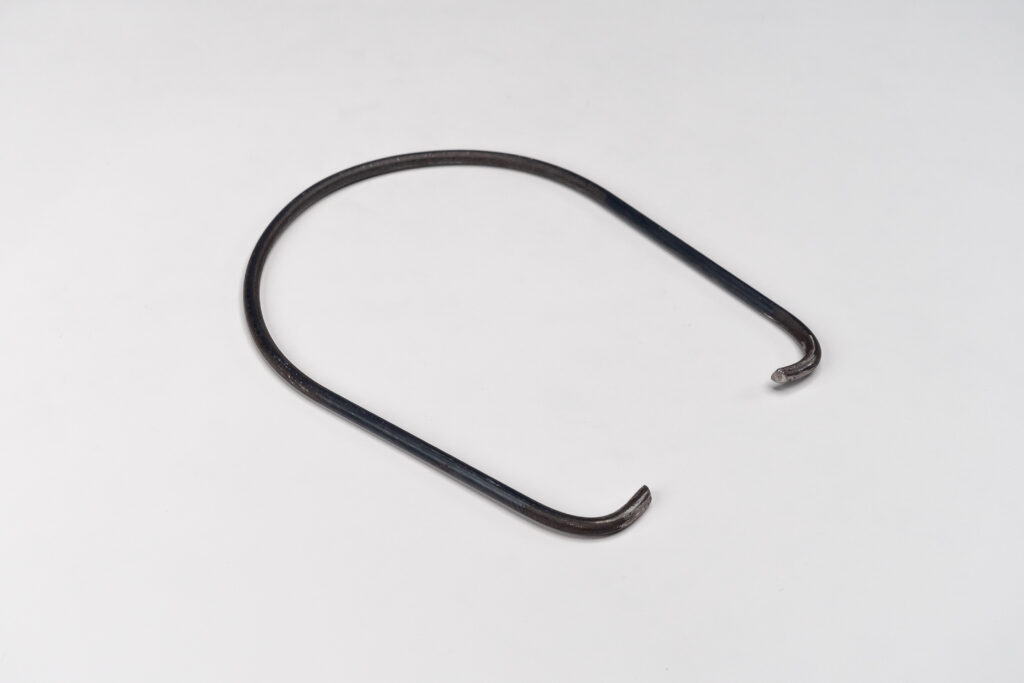
Steel
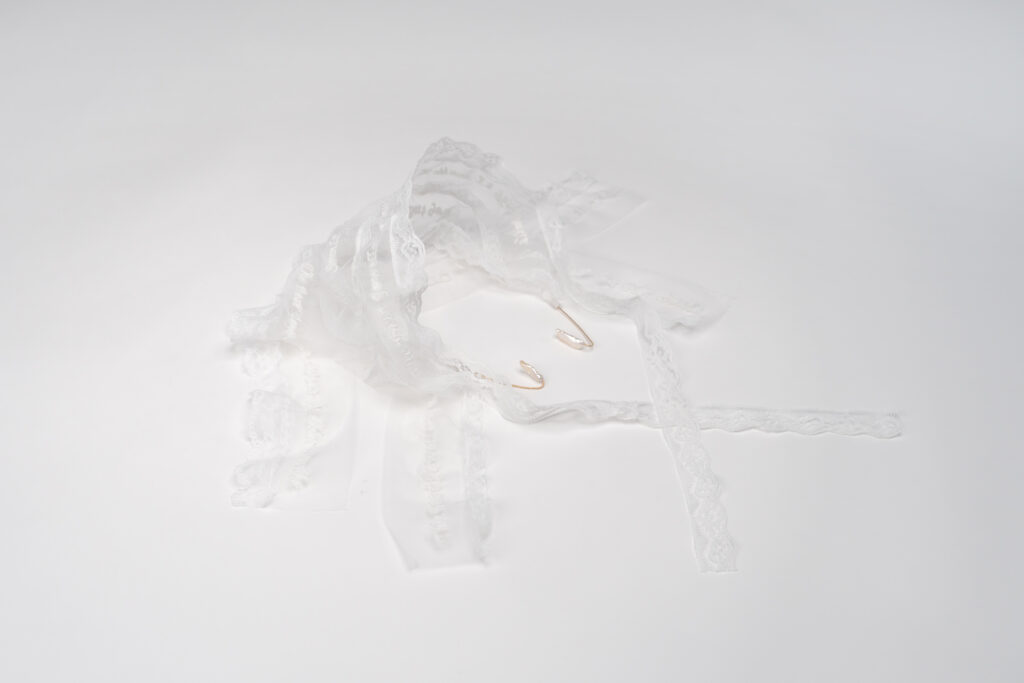
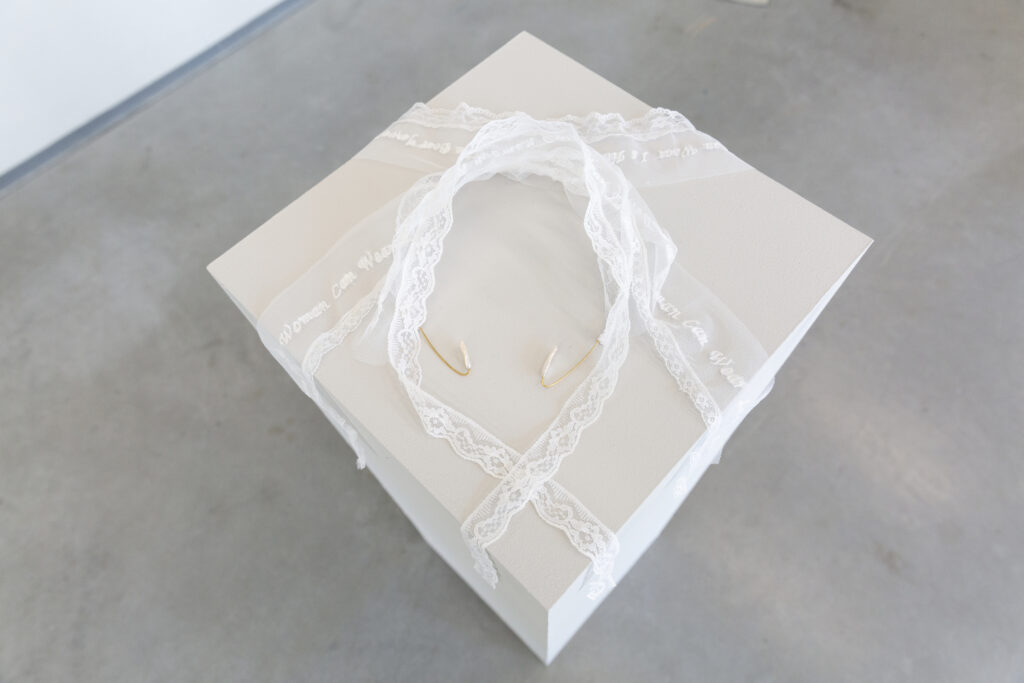
Lace, tulle, pearls, 18 carat gold gilded silver
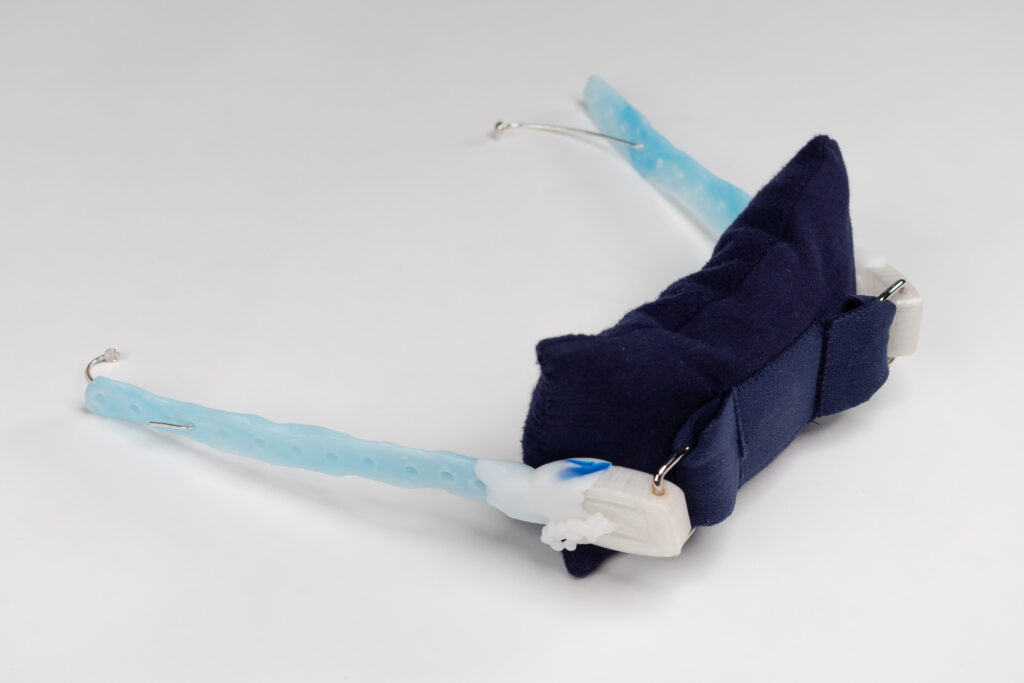
Sterling silver, thermoplastic, textile, metal, PLA
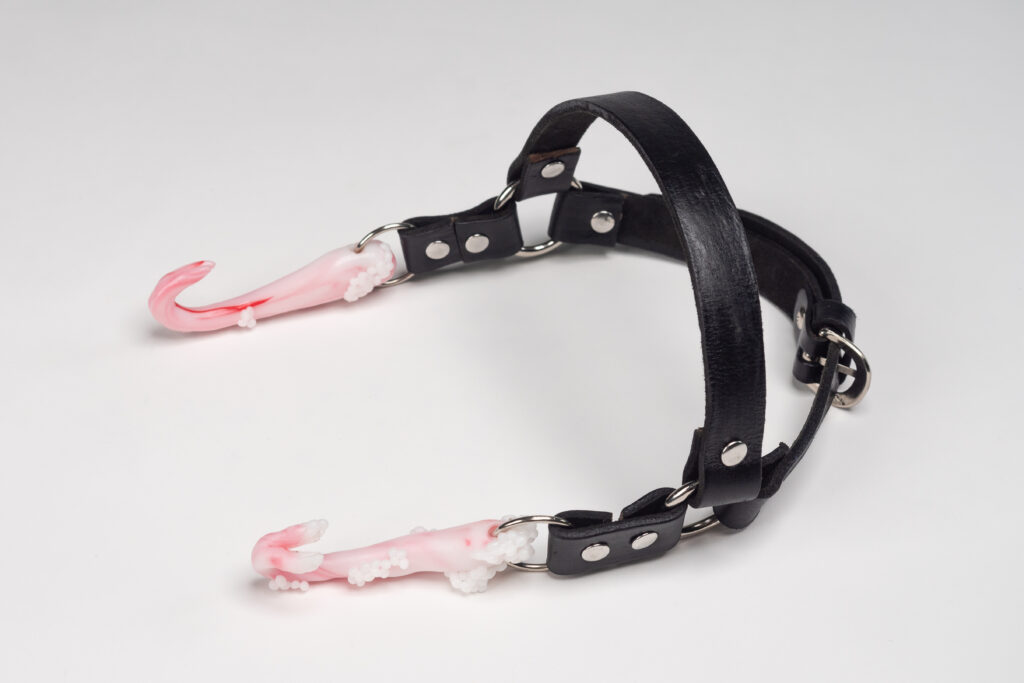
Leather, metal, thermoplastic
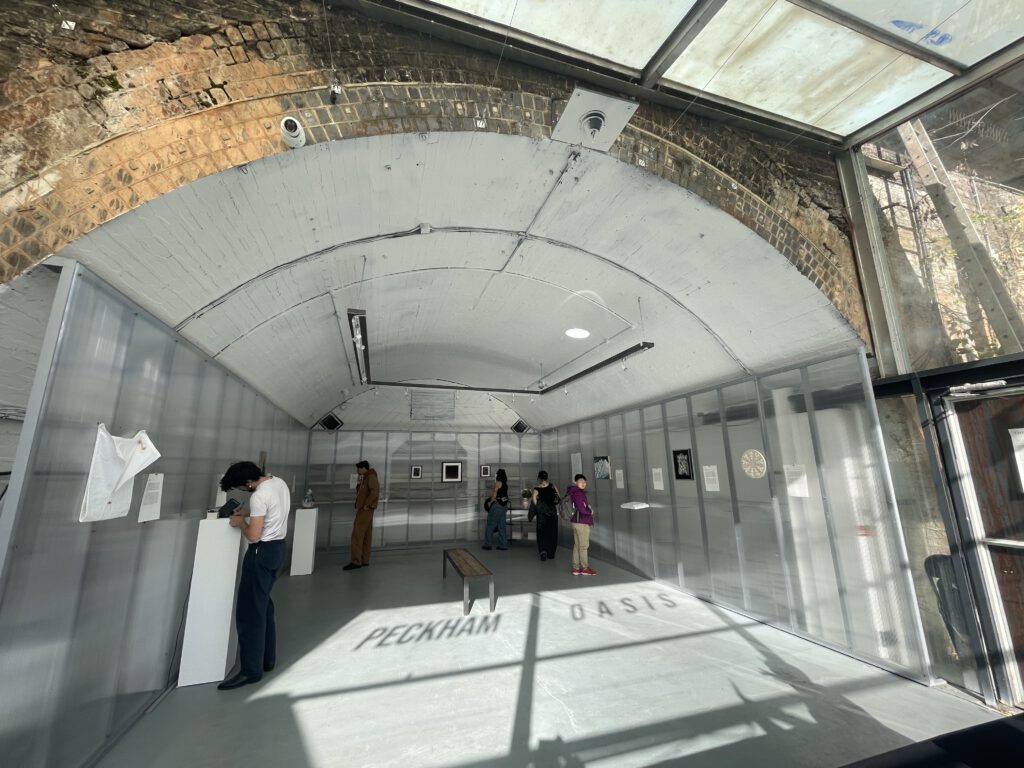
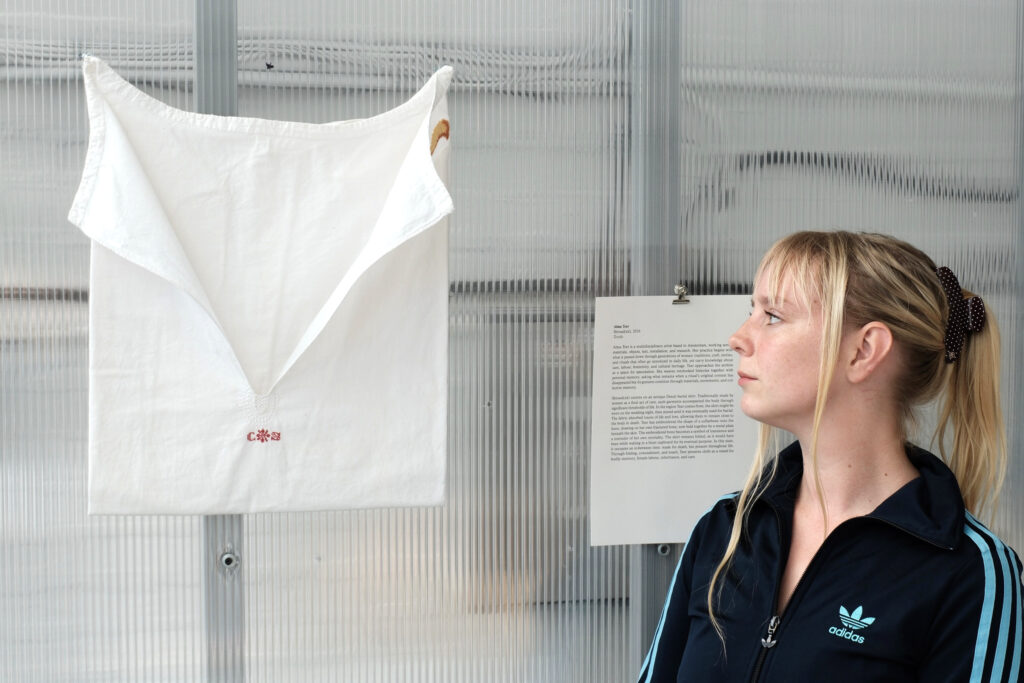
Shroud(ed)
2026
Exhibited during ‘The Art Of Endings’ at
Peckham Oasis Gallery in London
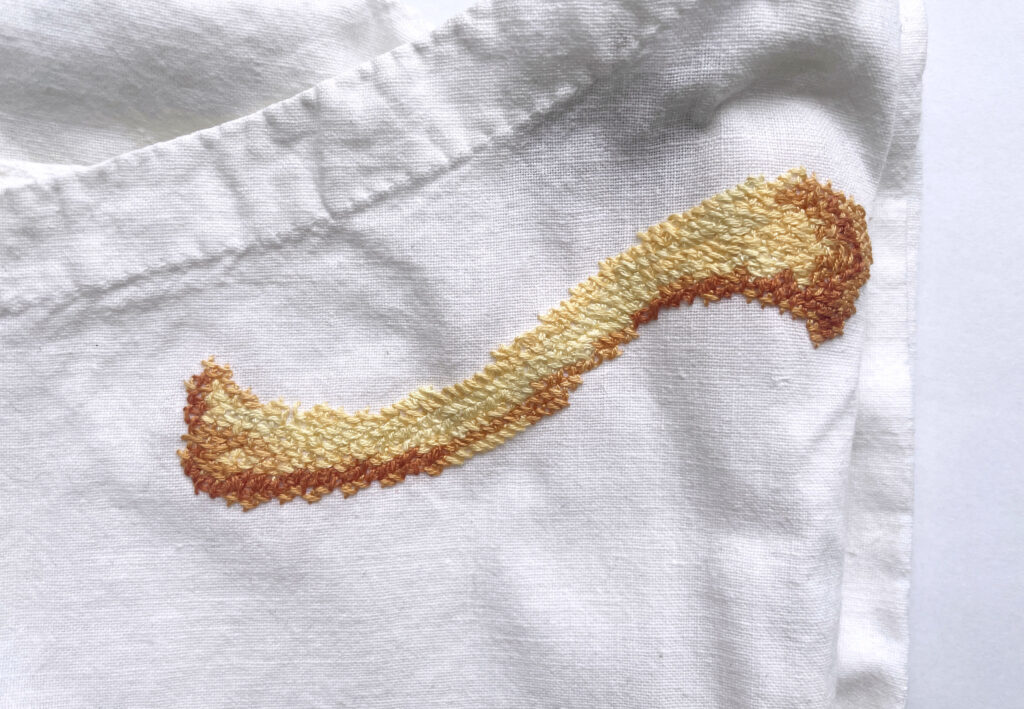
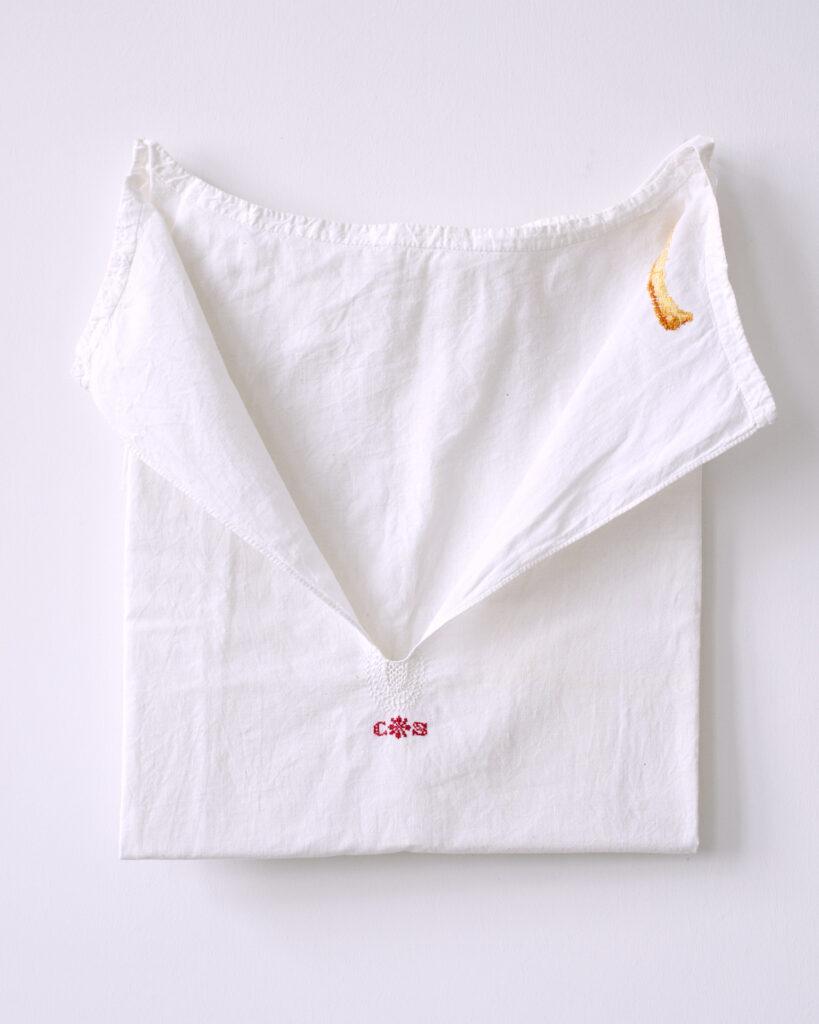
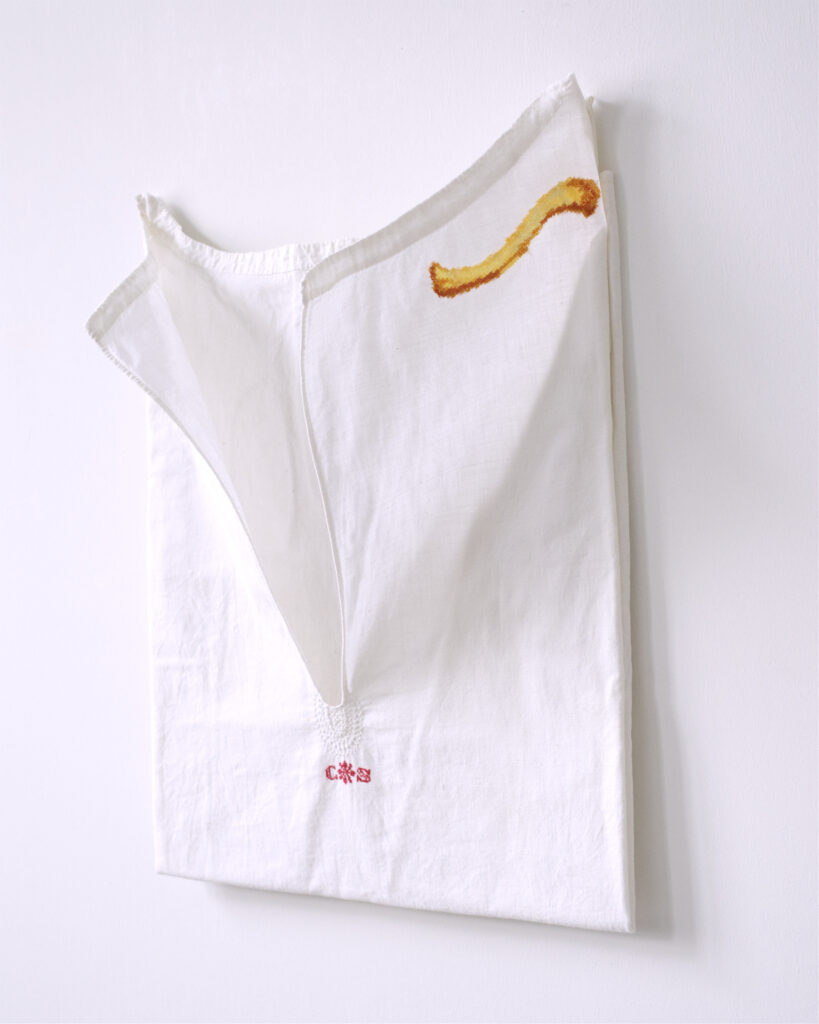
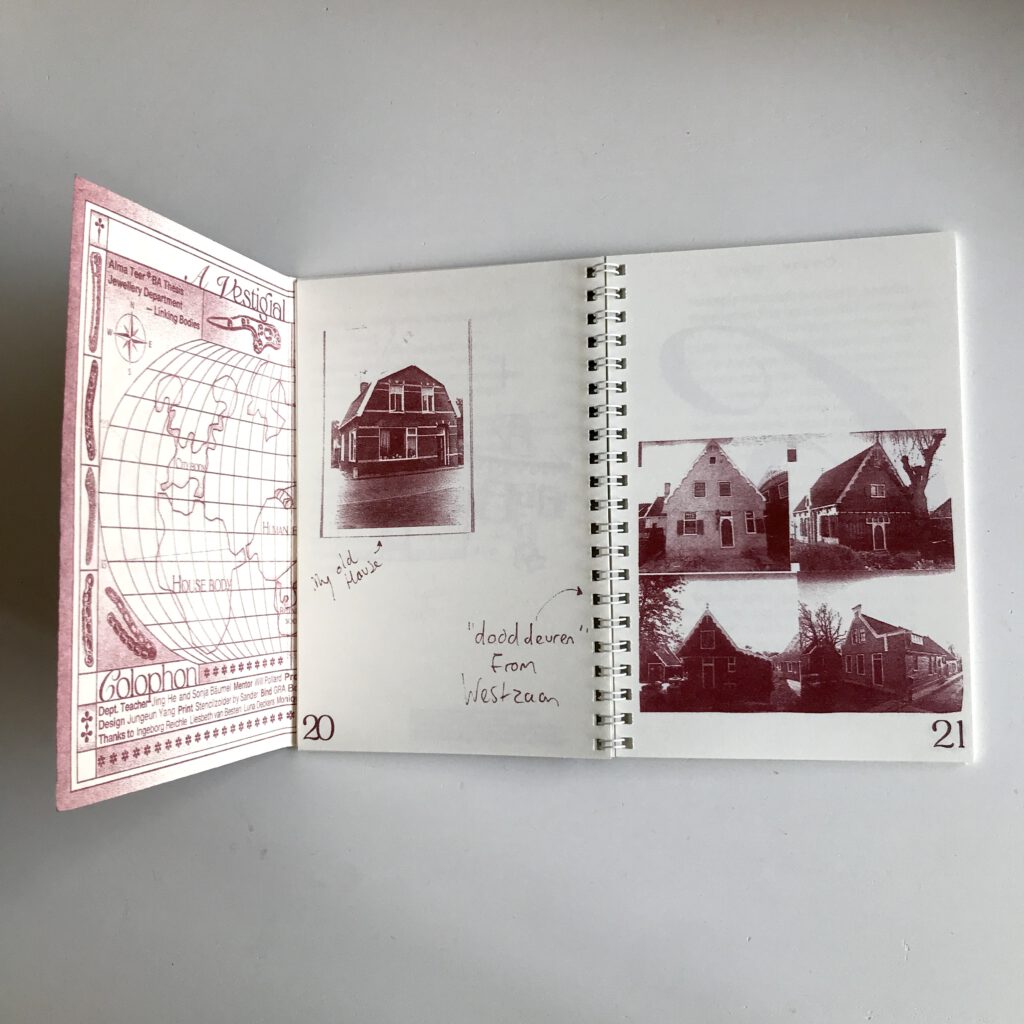
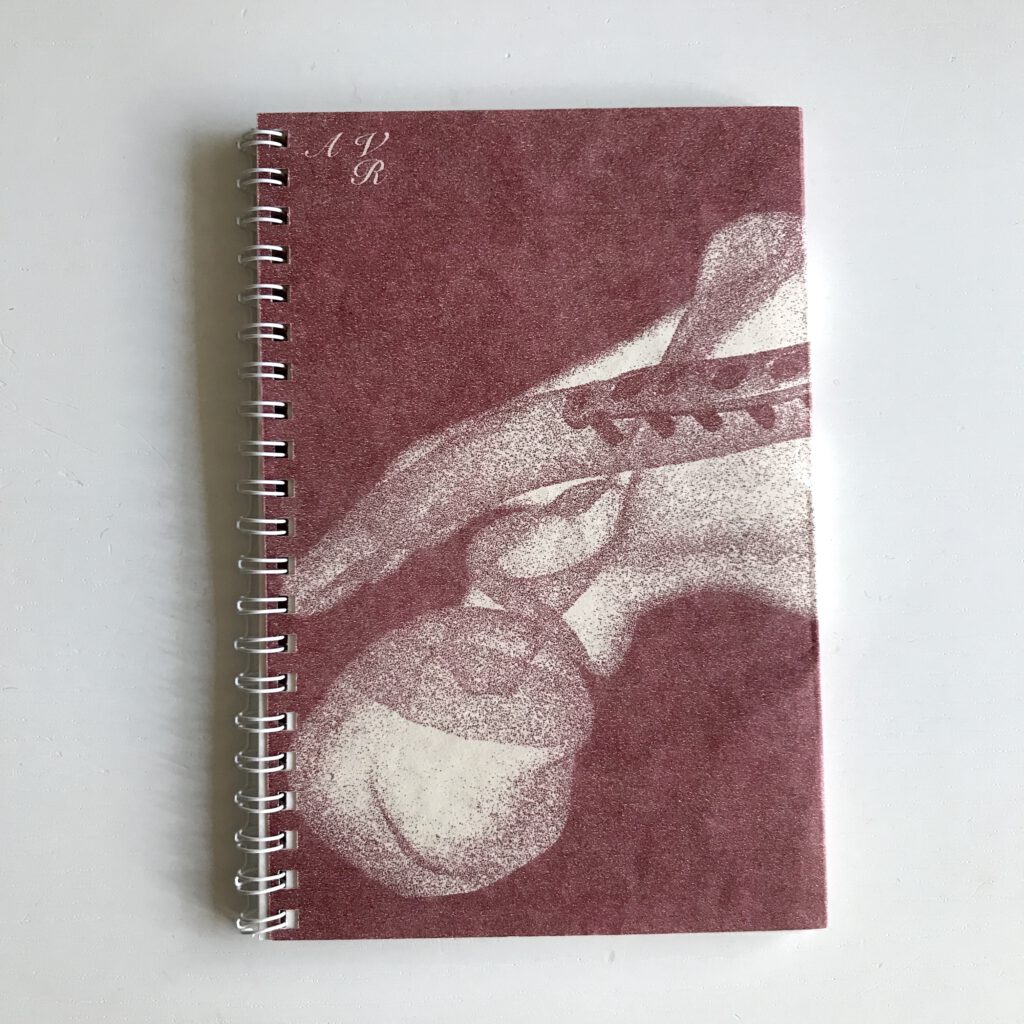
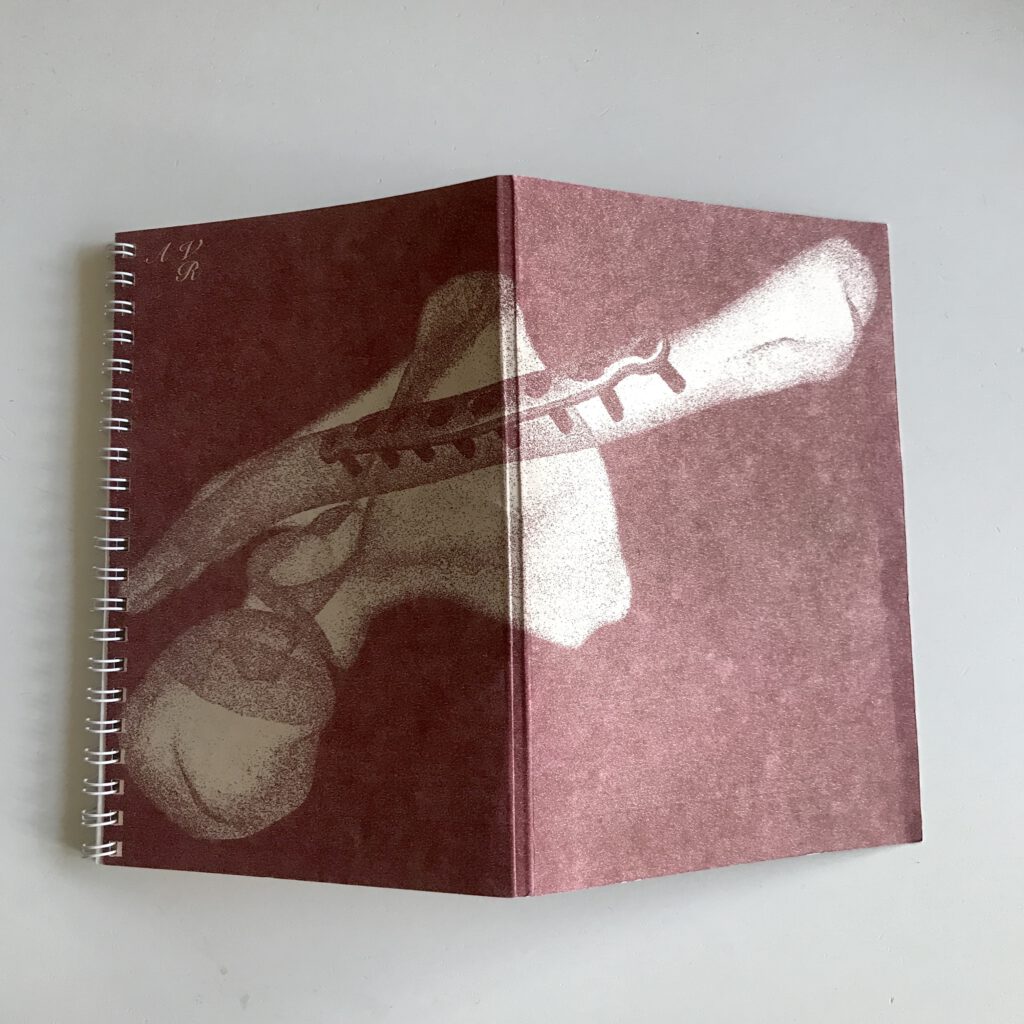
Traditionally made by women as a final act of care, the burial shirt belonged to a Dutch domestic textile tradition in which garments accompanied the body through significant thresholds of life. Because these shirts were made to be buried with the deceased, their history has remained difficult to trace. I approach a found 20th century linen shirt through a process of speculation, imagining the life it may have held and the role it may have played. I intervene in this old garment by embroidering a collarbone onto the shirt, echoing my once fractured bone, a personal reminder of my own transience. Preserved in a folded state, the shirt reveals the embroidery through its open neckline, its collar spread as if welcoming you home.
Self published
2026
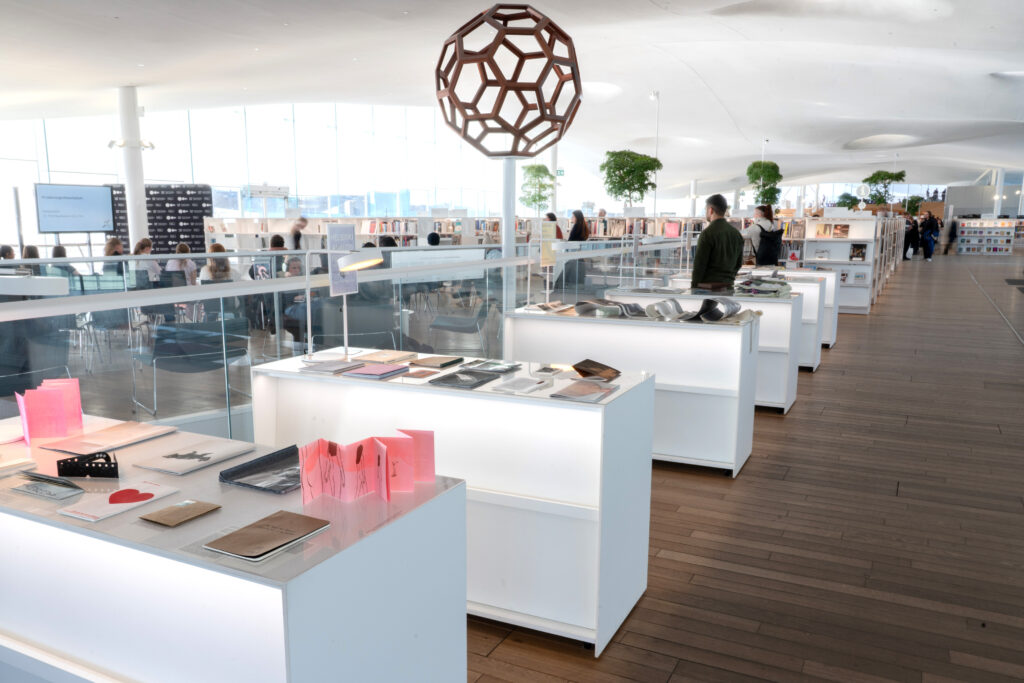
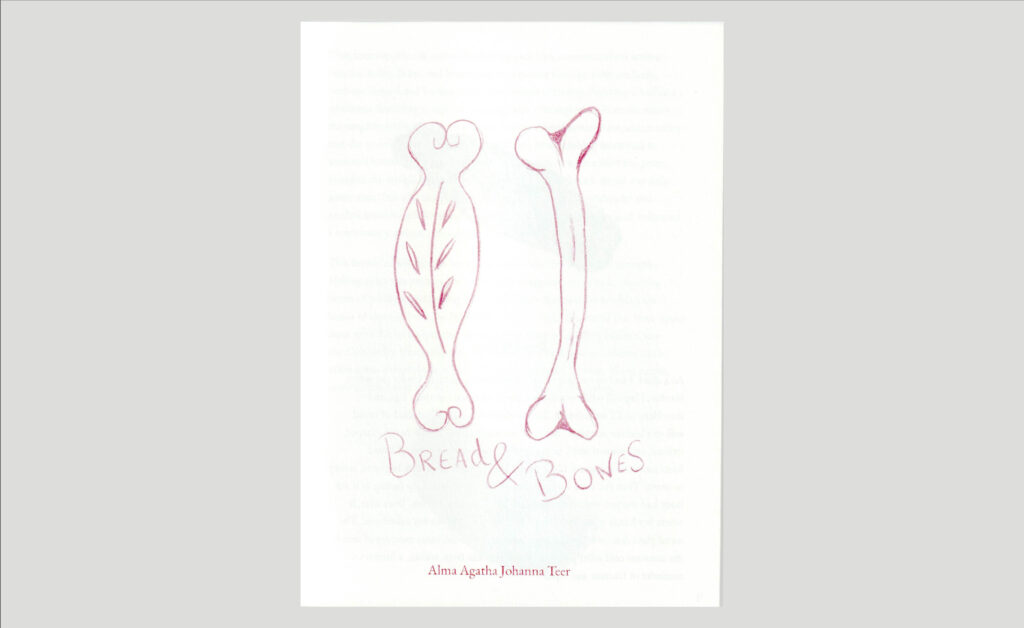
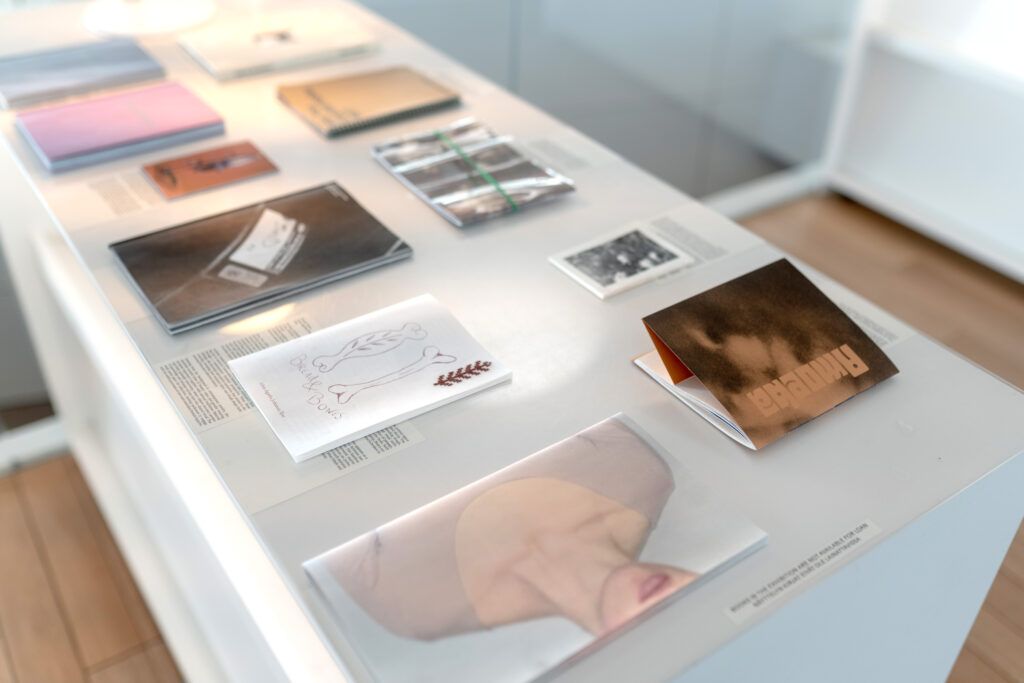
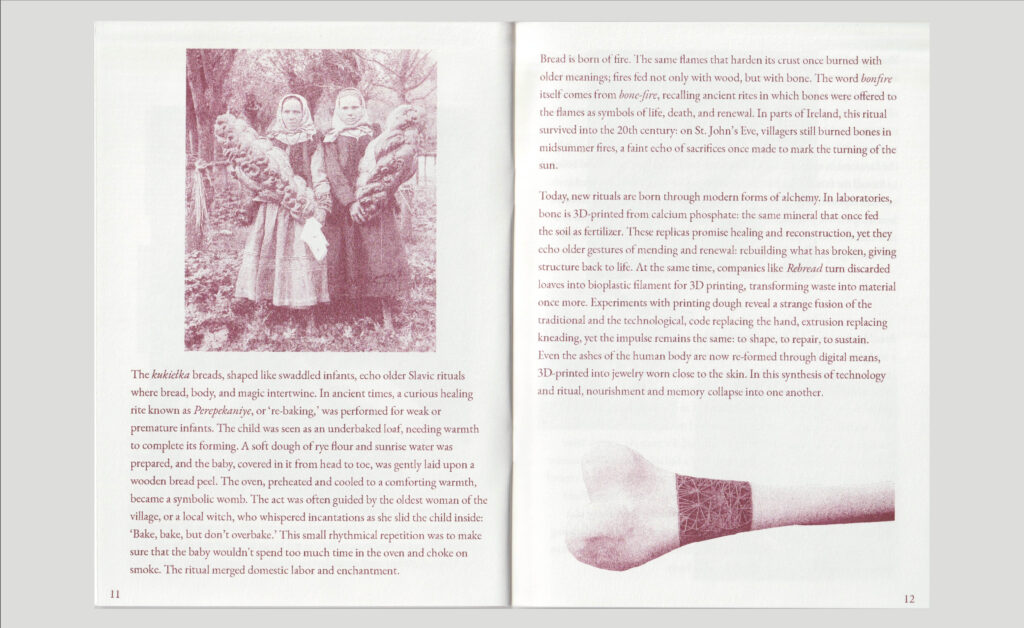
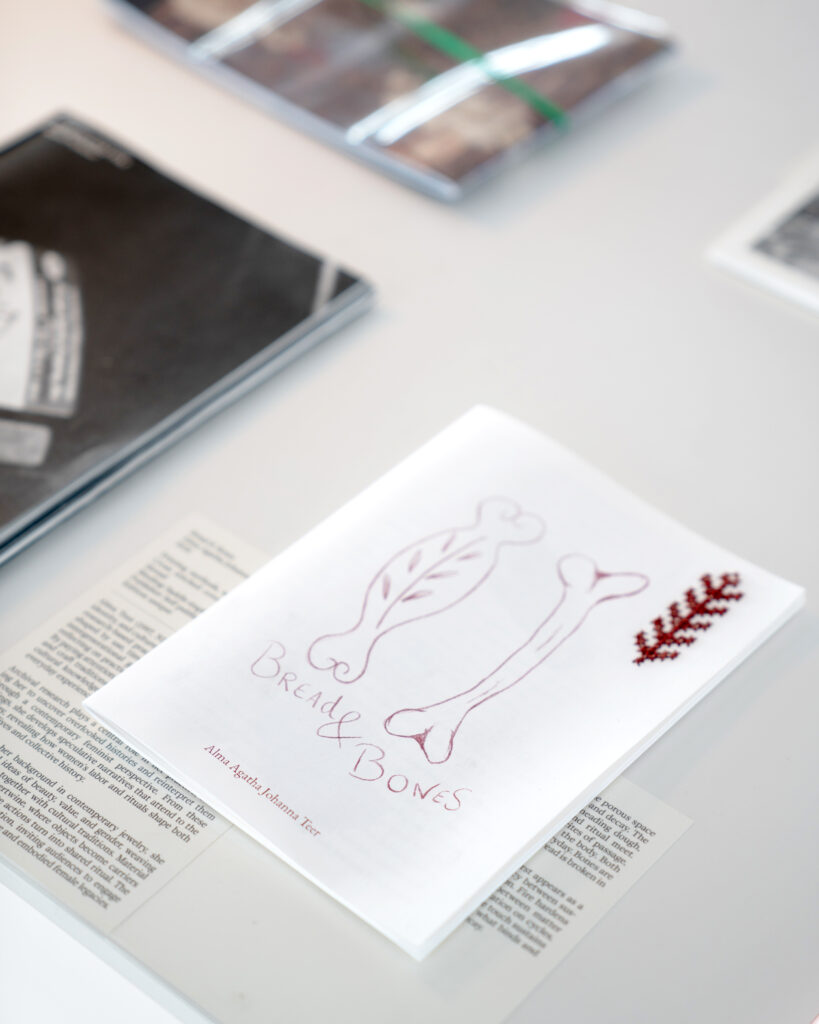
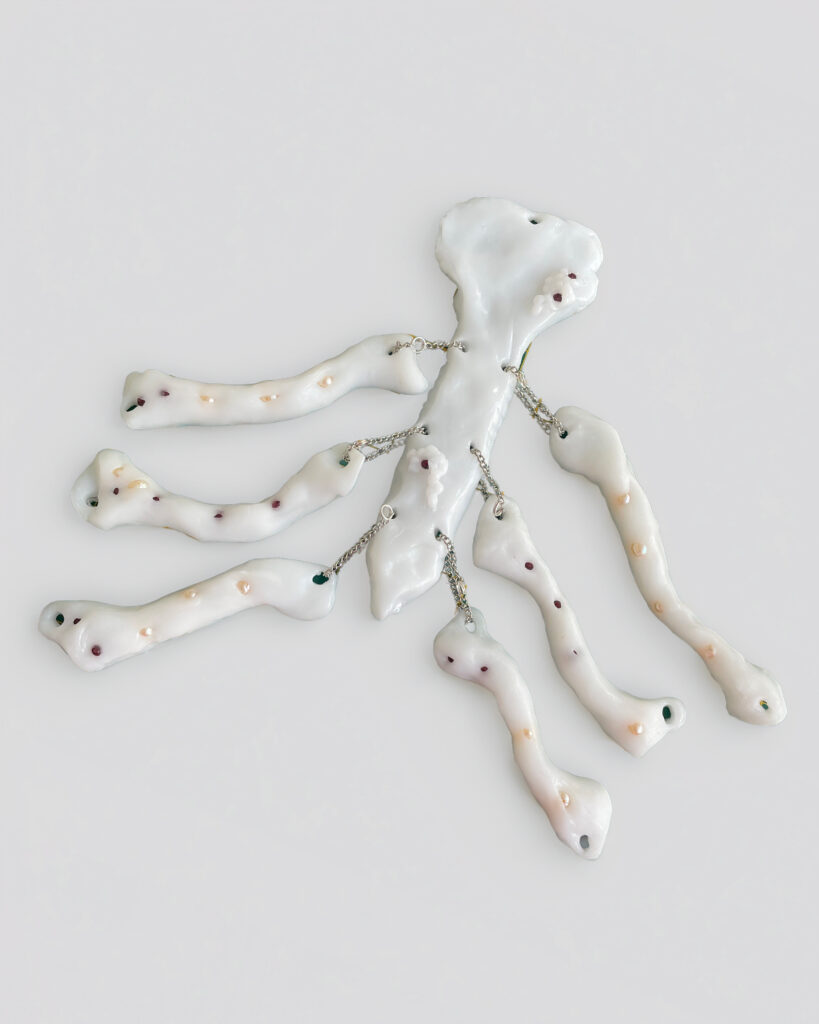
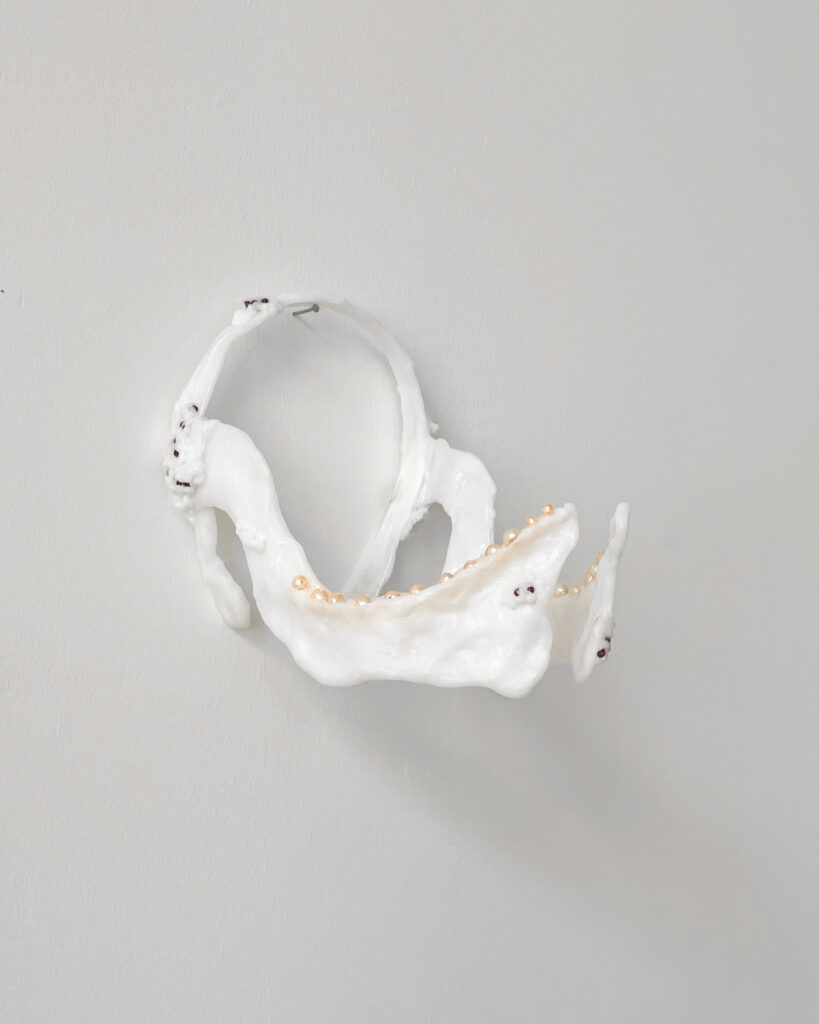
Bread & Bones moves between body and earth, nourishment and decay. It traces the gestures of women’s hands: kneading dough, mending bones, grinding grain, where care and ritual meet. Bread is shaped for offerings, celebrations, and rites of passage, while bones are burned, buried and adorned on the body. Both mark thresholds between the sacred and the everyday. Bones are broken in gestures of good luck and fortune, as bread is broken in sharing and quiet sanctity. Discovering these hidden intersections, what first appears as a strange combination, reveals an ancient intimacy between sustenance and structure, touch and transformation.
Wearable art pieces
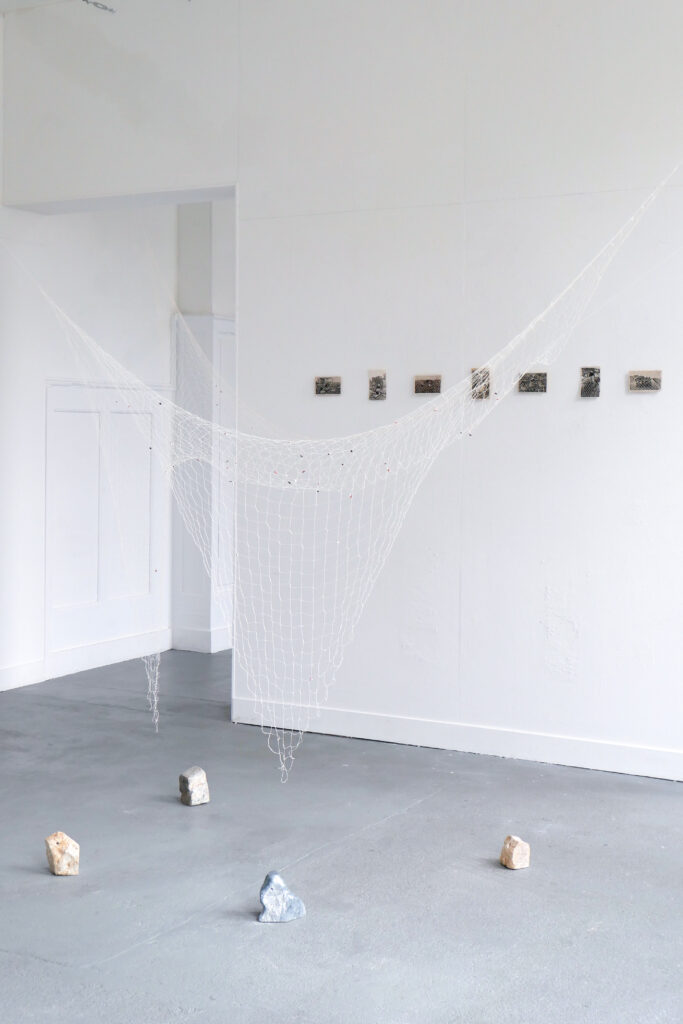
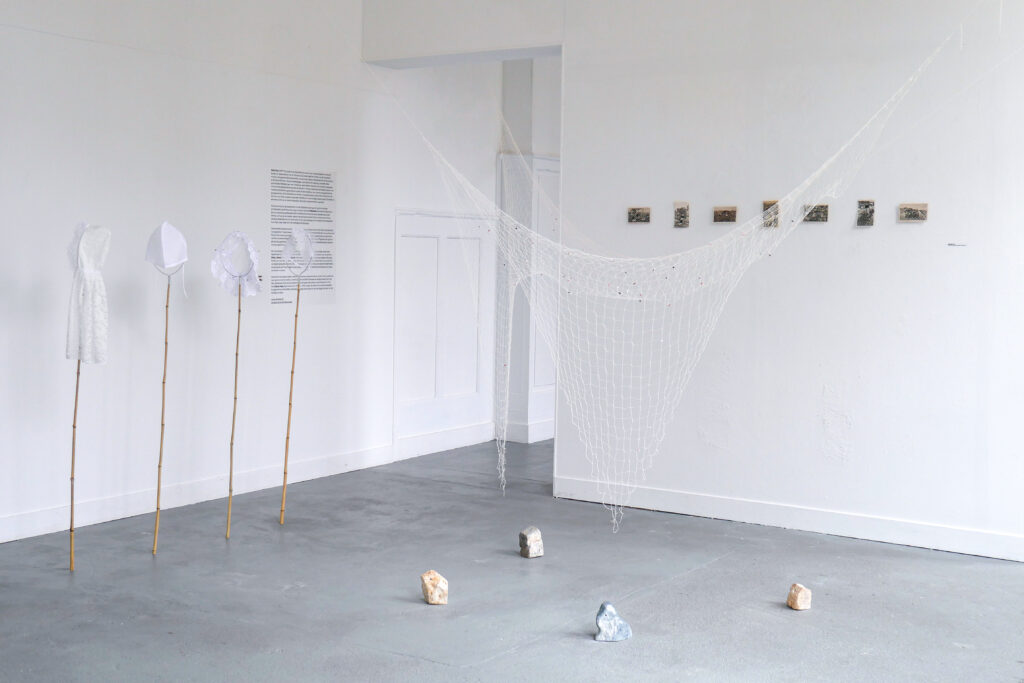
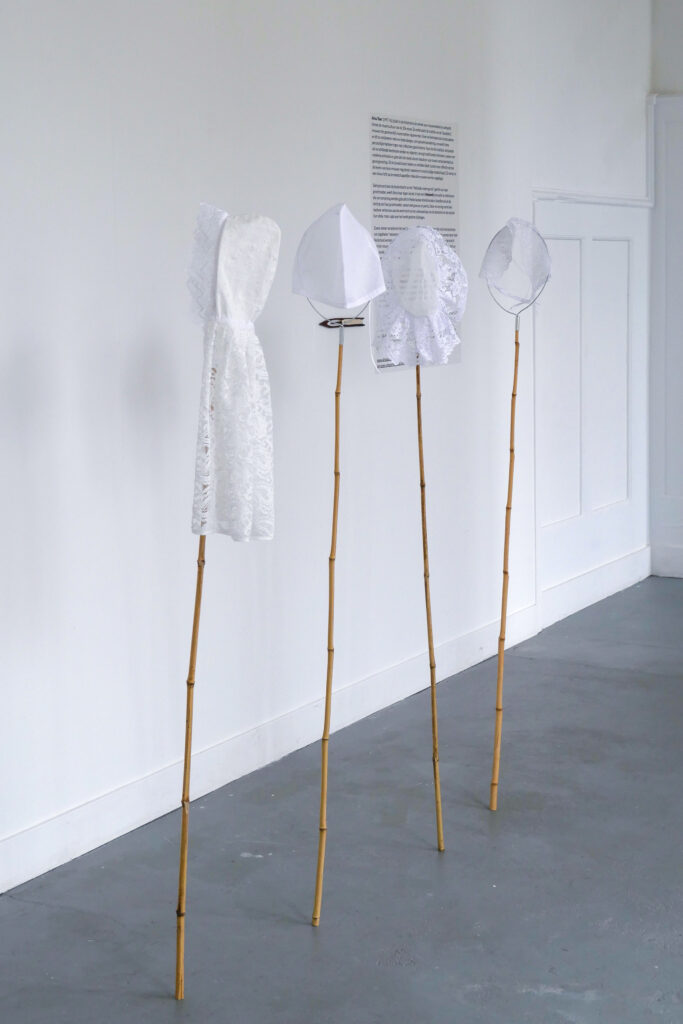
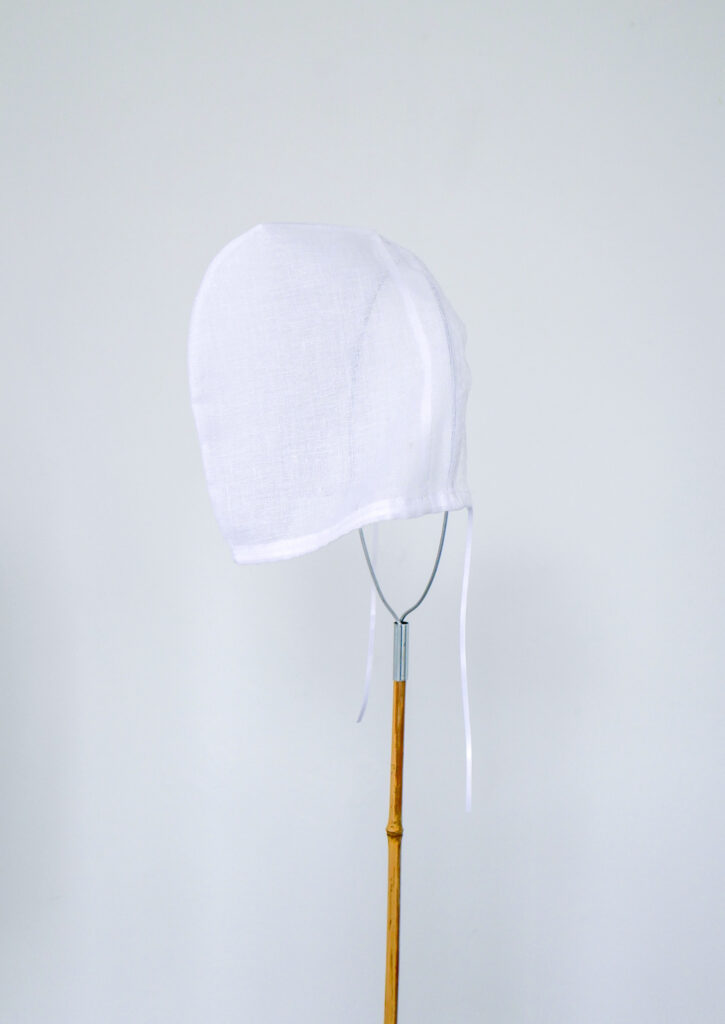
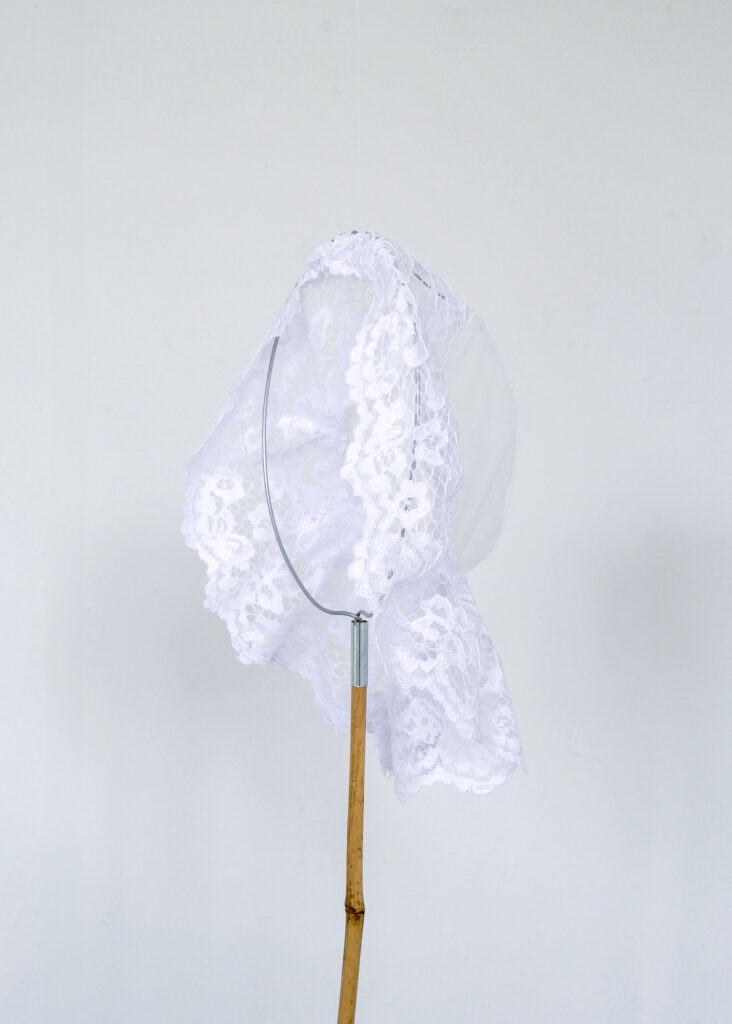
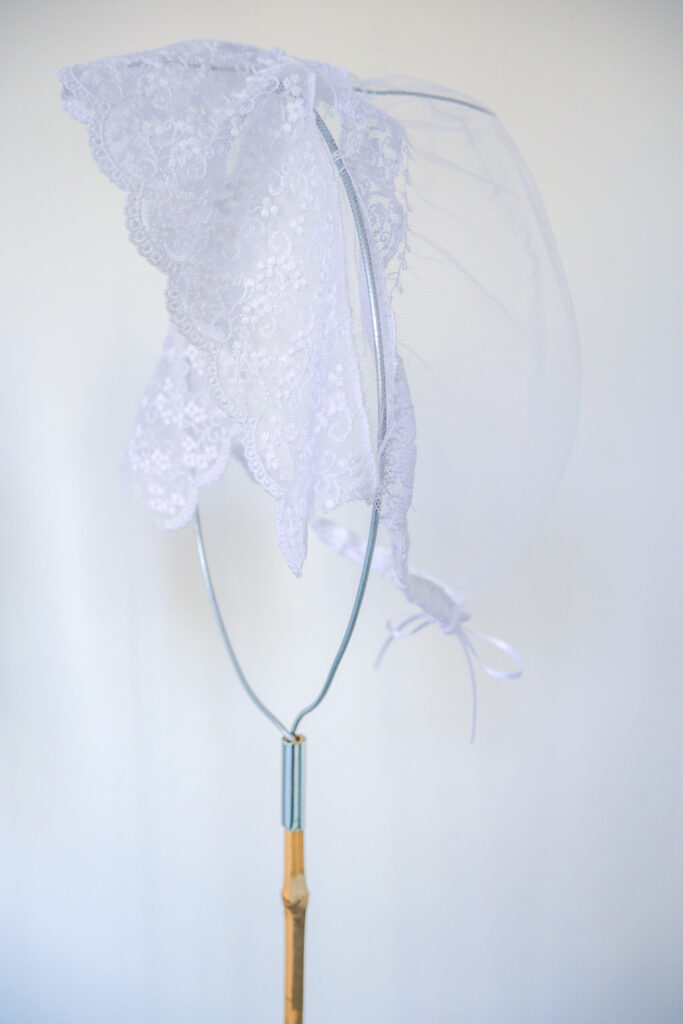
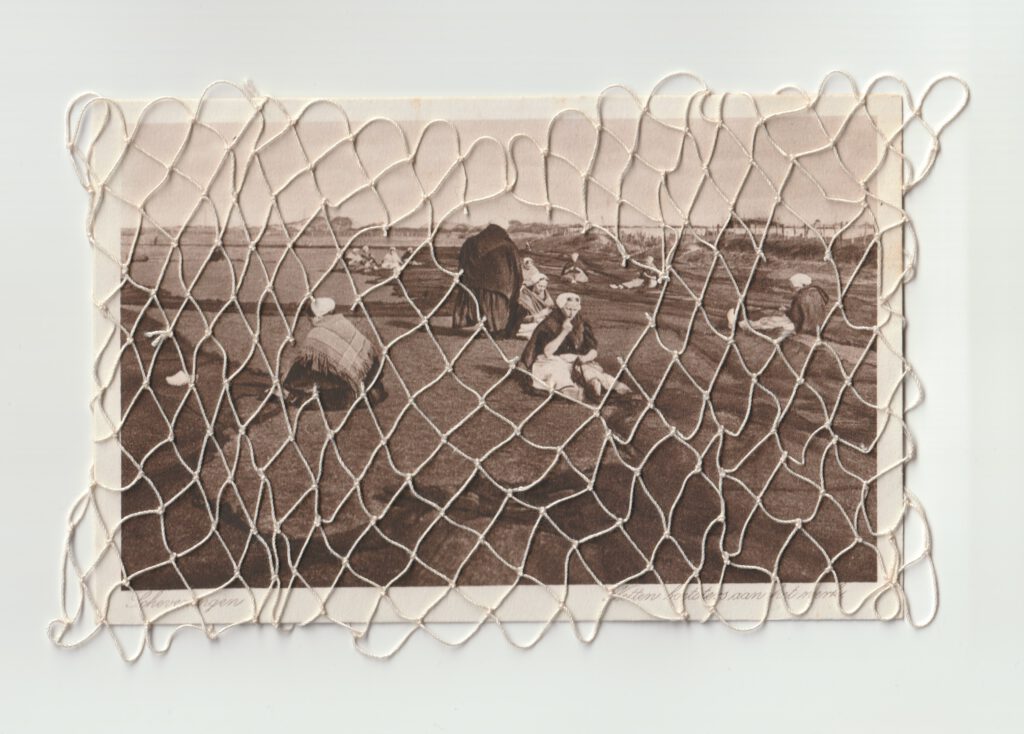
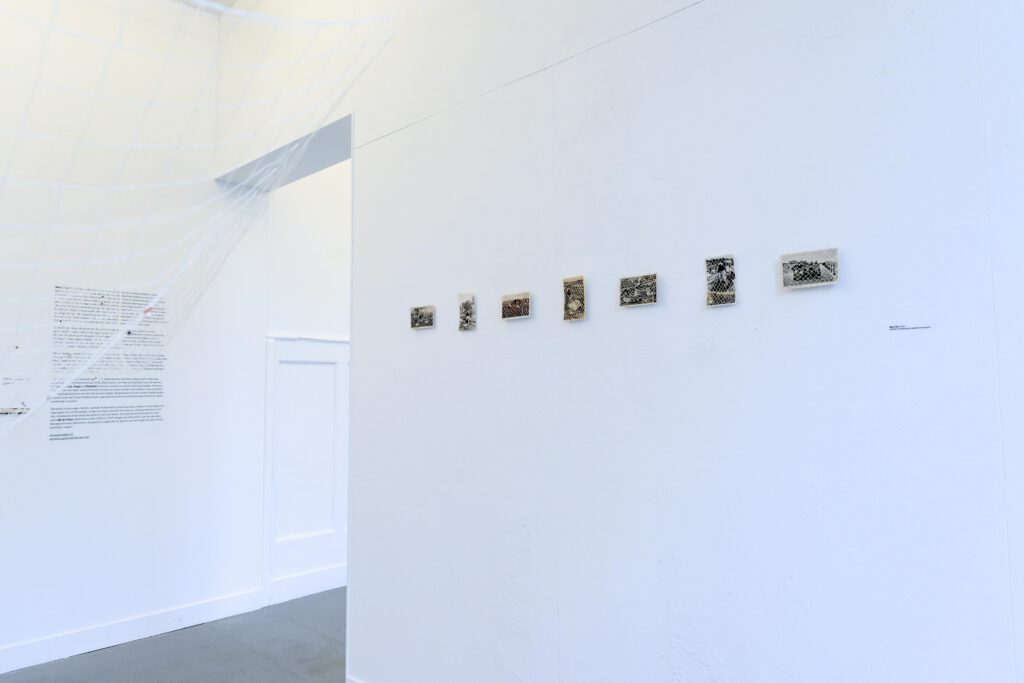
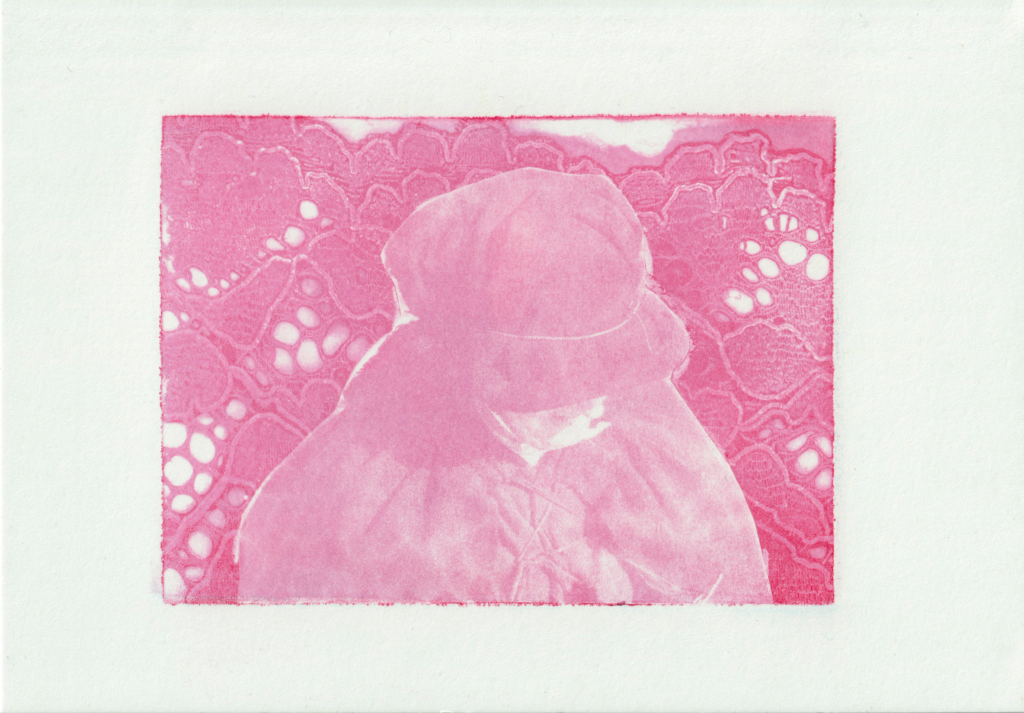
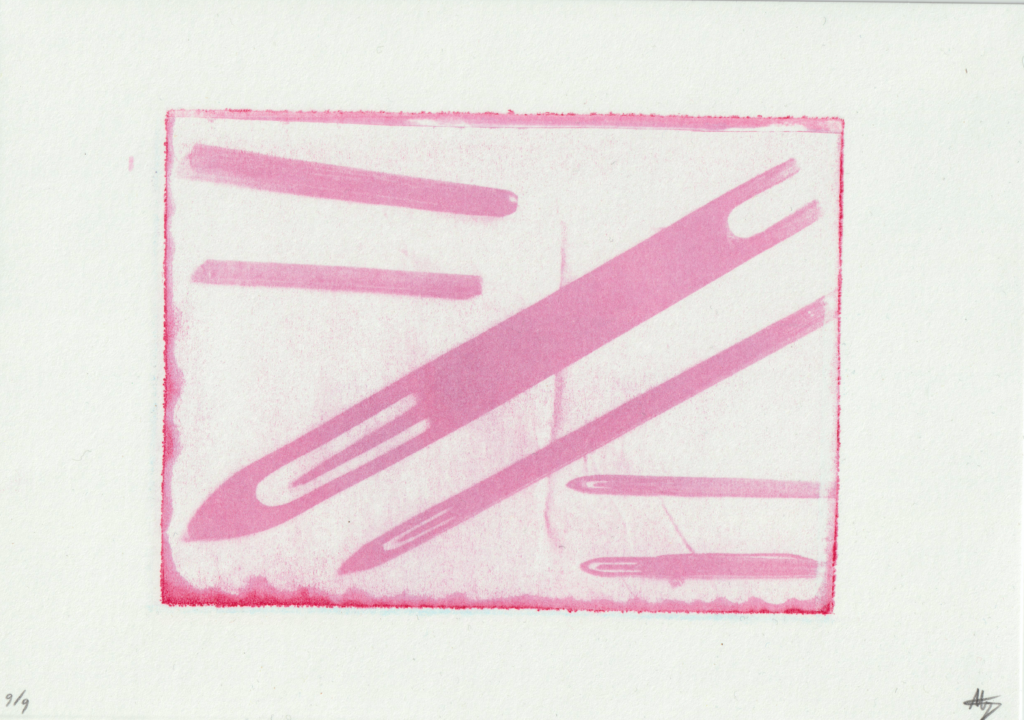
Net(werk) explores the history of the boetsters, women who repaired fishing nets together within coastal communities in the Netherlands. Drawing from 20th century archival photographs, regional costumes, inherited materials and family memories, Alma Teer connects their overlooked labour to the present.
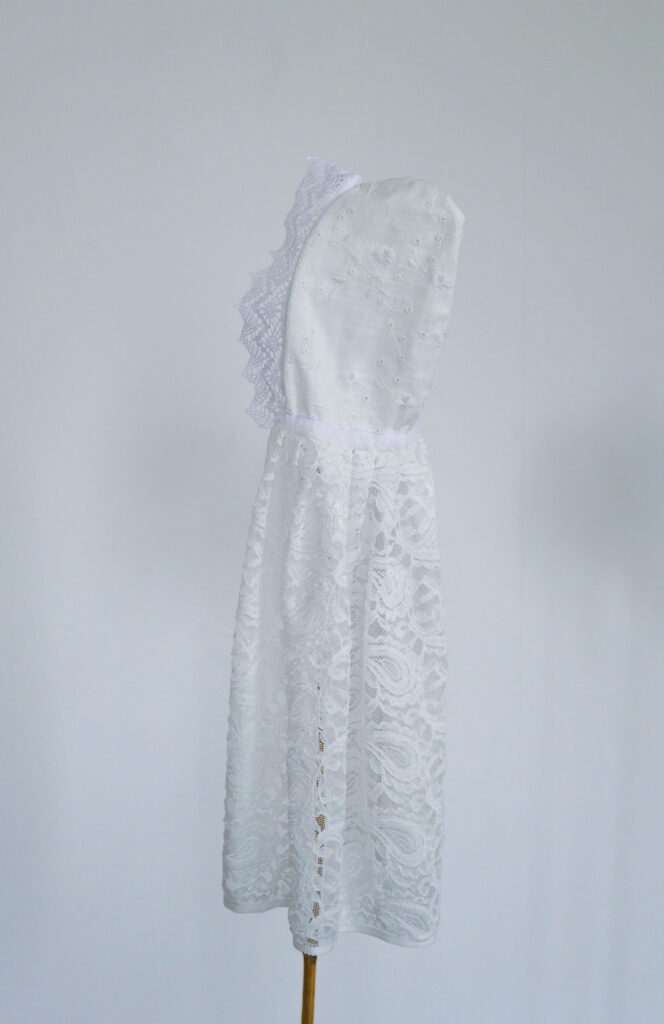
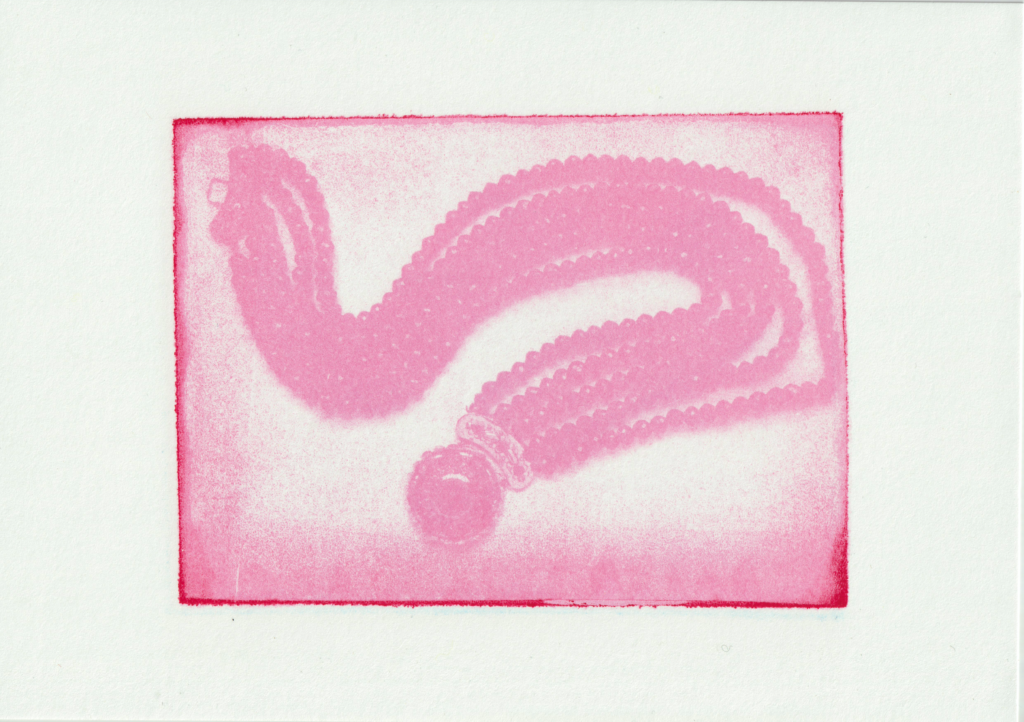
Using traditional netting and textile techniques, she creates fishing nets, lace bonnets, objects and installations. Cotton fishing twine inherited from her grandmother and gemstones from a family necklace become materials through which personal and collective histories intertwine.
The fishing net becomes both material and metaphor: a structure that connects, holds and supports, but can also entangle and confine. Through collaboration with her mother and the study of archival images, Teer traces the transmission of textile knowledge between generations, while bringing the anonymous women who maintained these traditions back into view.
‘Mijn Vissersmeisje’
O, hoor de golfjes kabb’len
Tegen slagzijde aan
Zo gaat ook door jouw babb’len
Vol gloed mijn harte slaan!
Stuur naar de oever henen,
Zit naast mij in het zand,
Dan zing ‘k als een Sirene
Voor jou alleen aan ’t strand!
Mijn vissersmeisje
Kom waag het reisje
Zing van mijn wijsje
Het blij refrein
Het vissersleven
Kan vreugde geven
Wendt dan de steven
’t Zal heerlijk zijn!
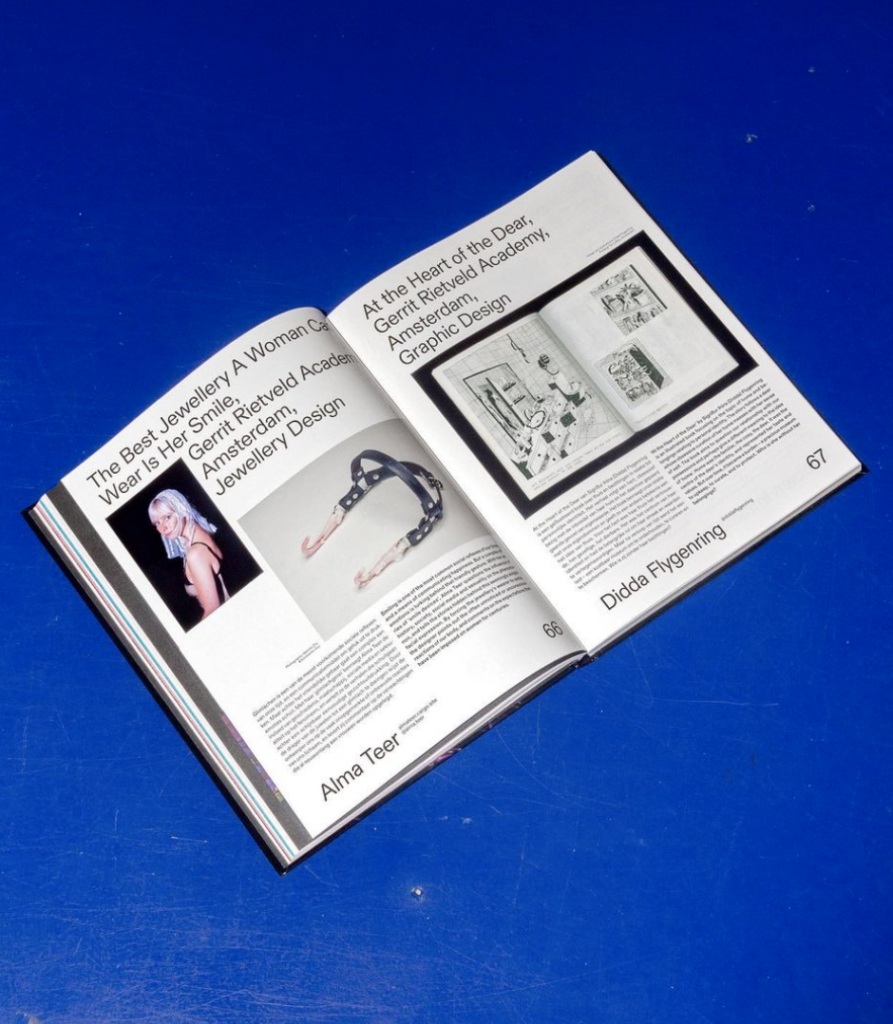
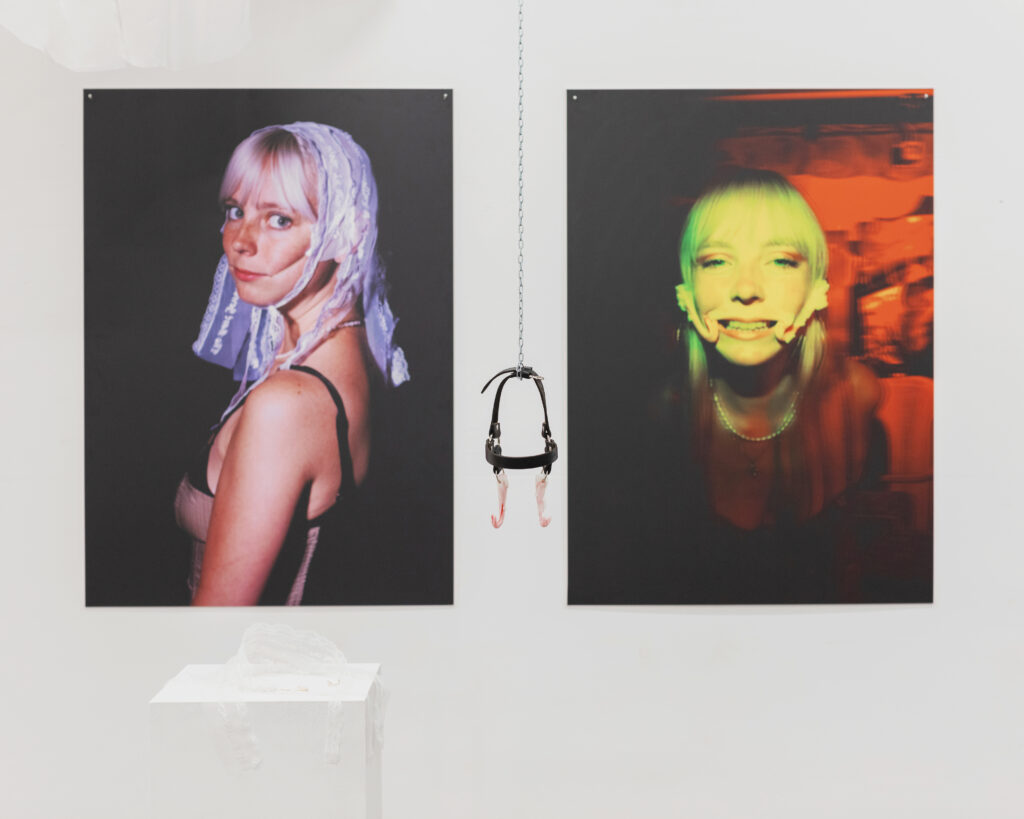
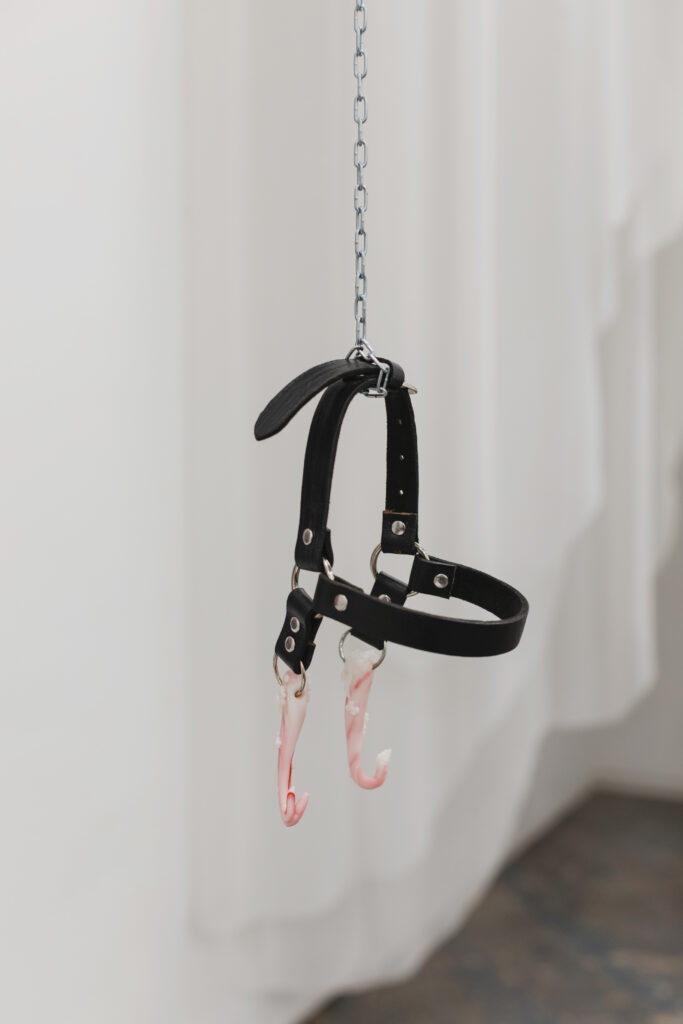
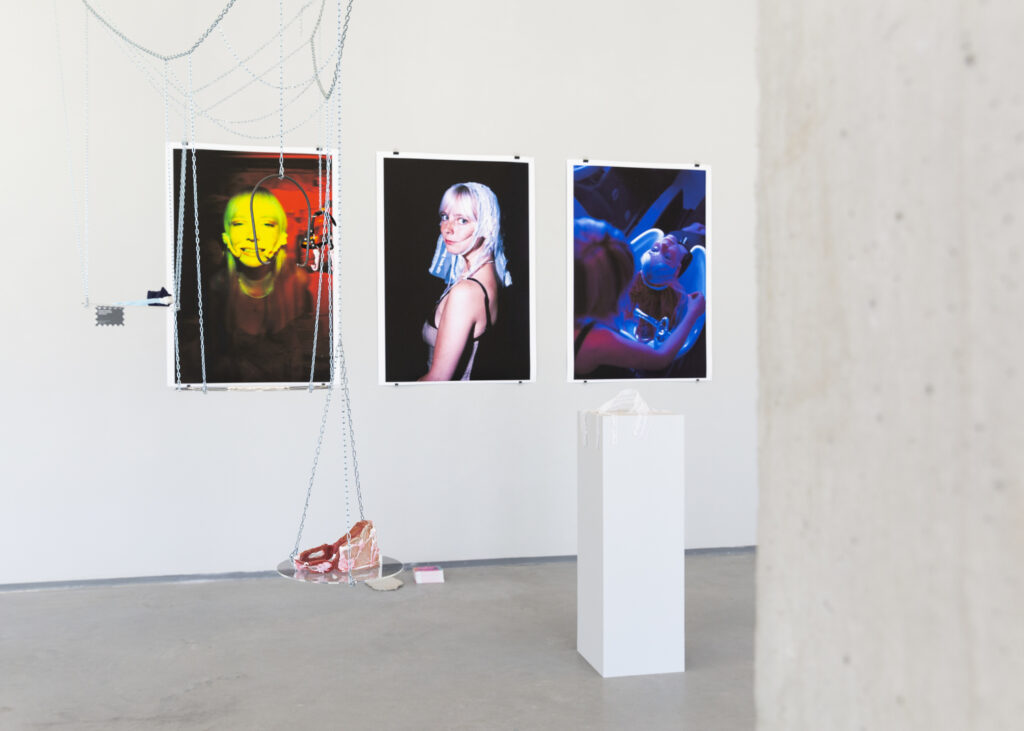
Smiling is one of the most common social reflexes of our time, a communication tool for expressing happiness. But a complexity of emotions lies behind this friendly gesture.
My family of ‘smile devices’ questions the influence of history, society, social media and sexuality on the social behaviour of smiling. By forcing the wearer to smile I want to create awareness about those habits of our bodies that go unnoticed in daily life.
By exploring femininity through form and material, I want to connect generations of women sharing the same universal experience of being perceived by the ‘male gaze’. Reclaiming the power over our bodies, our behaviour and our sensuality without being judged.
Men passing by telling unknown women to smile. Contributing to centuries of expectations imposed upon the female body. These pieces tell the real stories that can be found behind a seemingly simple smile.
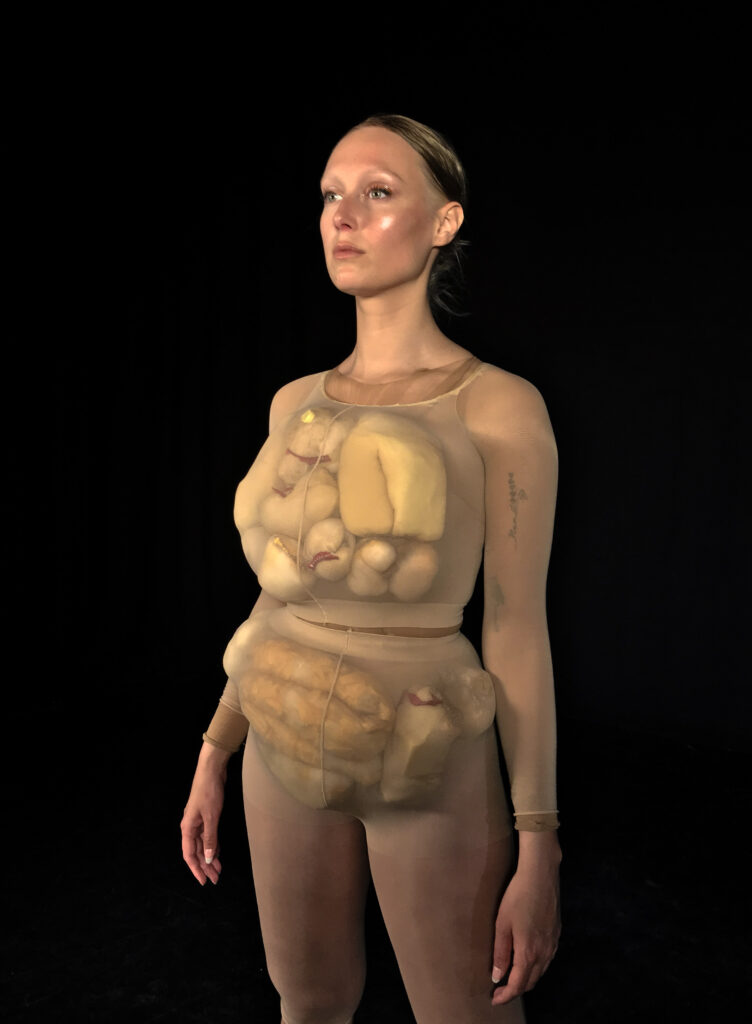
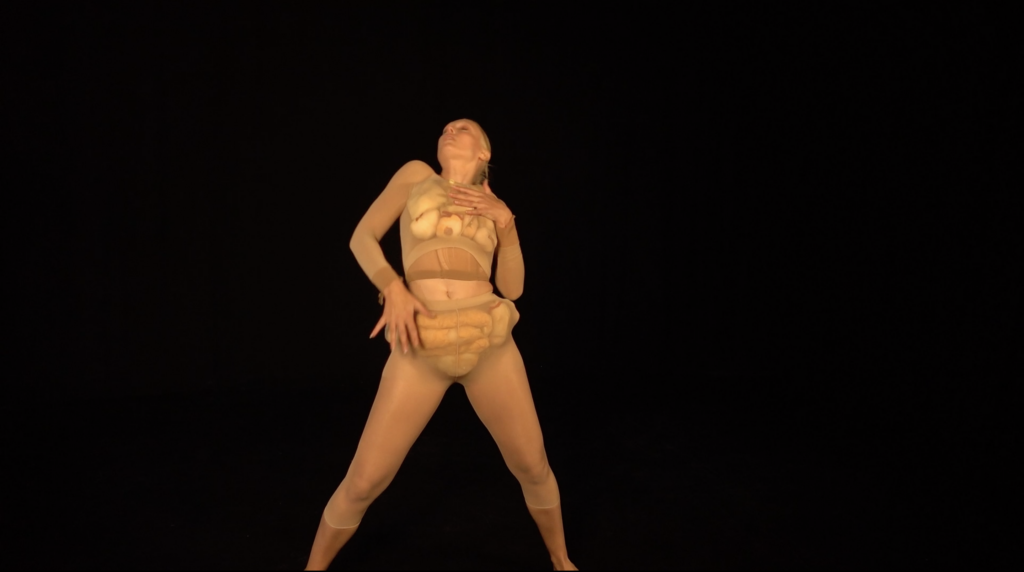
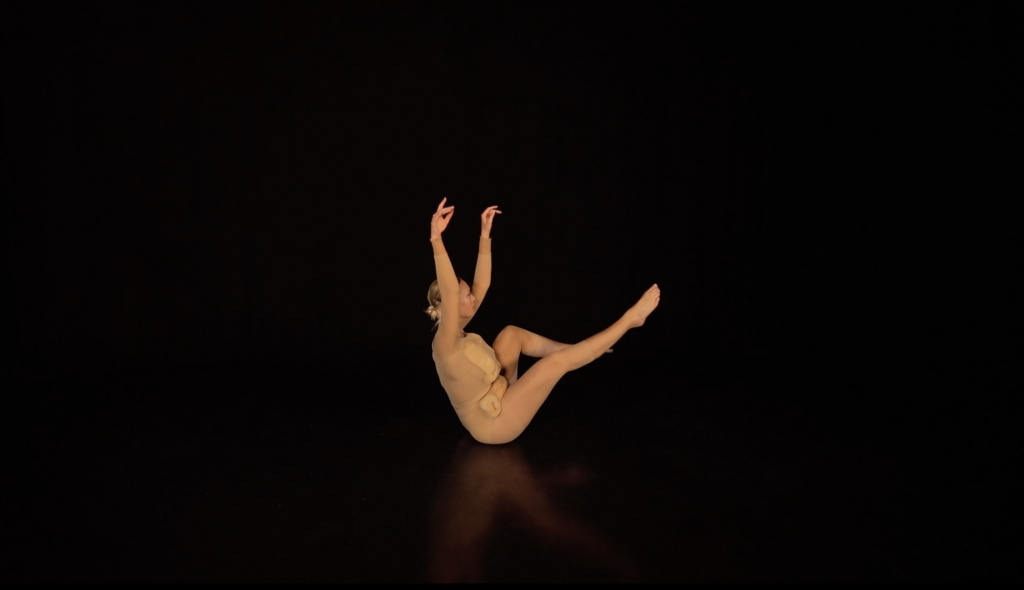
“Life is Heart” is a captivating dance performance by Alma Teer and Nina Teer. This collaborative project between two sisters; an artist and a professional dance performer, delves into the intricate relationship between the mind and the body’s organs. Highlighting the often alienating disconnection humans experience with their own physical body.
The harsh rhythm creates a tangible experience, a synthetical heartbeat beating far away in your chest. Its aim to express the gap between internal physiological processes and conscious awareness through inviting the audience to explore the profound connections within their own bodies.
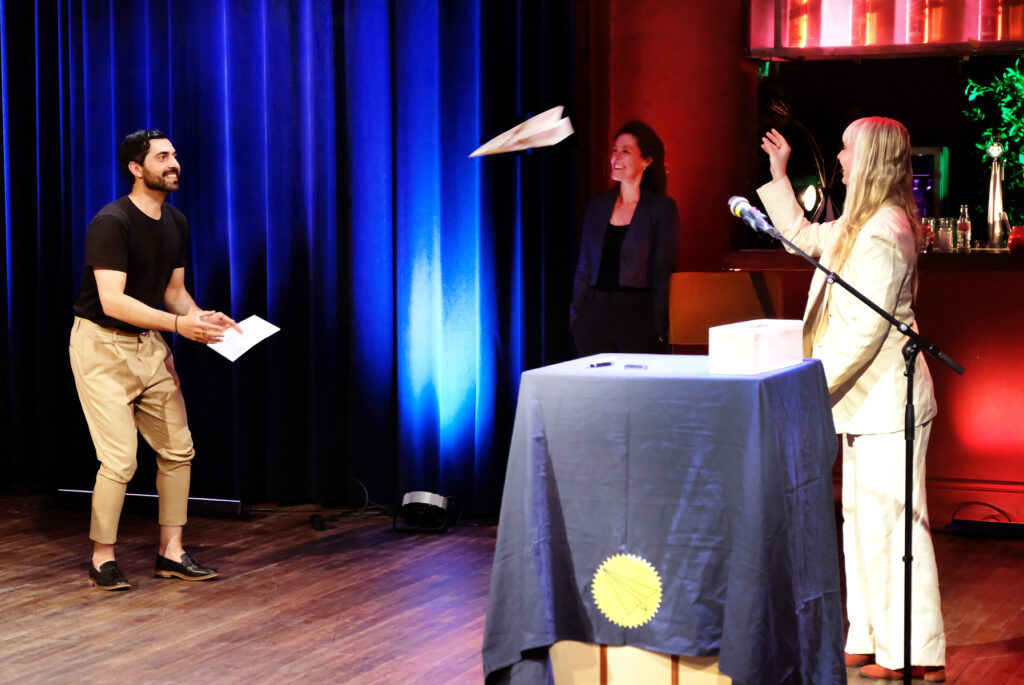
‘What has Huygens ever done for us?”